People follow leaders they trust. They follow leaders who show up as real human beings, not a polished mask. This is why leading with authenticity matters so much today. Teams want honesty, clarity, and consistency. They want leaders who keep their word and act with purpose.
In this guide, you will learn what authentic leadership looks like, why it raises trust and performance, and how you can practice it every day. You will get simple steps, examples, and habits you can use at work, at home, and in your community.
If you want to explore how modern leadership is changing, you can also read
Modern Leadership Styles for High-Impact Teams.
Authentic leadership means you lead with honesty, self-awareness, and steady values. You do not act one way with your team and another way behind closed doors. You say what you mean and follow through.
An authentic leader:
These traits create a space where people feel safe to speak up, share ideas, and do their best work.

Research on leadership shows that trust in leaders has a strong link to engagement, performance, and retention. Teams are more likely to go the extra mile when they trust their leaders’ character and words.
People want leaders who:
When people see this kind of leader, they feel safe. Safe teams speak up, solve problems faster, and bring better ideas forward.
If you want to see how positivity helps leaders, you may explore
Why Positivity Is Important in Leadership: A Complete Guide.
Many leaders want to be real, yet they feel held back by fear and pressure.
Common reasons include:
They worry that showing doubt, emotion, or limits will make others lose respect.
They think they must fit a certain image of a leader instead of being themselves.
They hide mistakes or questions to look strong at all times.
They avoid hard conversations, even when the truth would help the team.
They model their style on someone else and ignore their own strengths.
Authentic leadership grows when you face these fears and choose honesty over image, step by step.
Trust is not a soft extra. It has a strong impact on real results:
Authenticity supports these outcomes. When leaders are honest and consistent, trust grows. When trust grows, teams perform better.
For a deep dive into values-based leadership, you can also read
Principled Leadership: How Values Shape Strong Teams and Cultures.
Here are simple, clear traits that mark authentic leadership.
You know your strengths, limits, triggers, and values. You keep learning about yourself and how you affect others.
Speak the truth with respect. Skip jargon or vague statements. Deliver your message in a simple and kind way.
You act in line with your values even when things get hard. People know what to expect from you.
You own your choices. You admit mistakes early, fix them, and learn from them.
You treat every person with dignity. You listen, invite input, and care about impact, not just intent.
You connect your decisions to a clear “why.” Your team knows what you stand for and where you are headed.
These qualities overlap with many people-first models, including servant leadership. For example, the 7 Pillars of Servant Leadership place strong weight on character, putting people first, and moral authority.
You do not need a big title to lead with authenticity. Small daily actions speak the loudest.
This simple line shows honesty and builds trust.
Do not wait for someone to point them out. Own them, share what you learned, and move on.
Let your team know what matters most to you: fairness, growth, kindness, clarity, or service.
Try questions like, “What is one thing I could do better as your leader? ” Then listen without defense.
People feel safe when praise is shared openly, and corrections are made with care and respect.
These small behaviors build a strong reputation as a real, trustworthy leader.
Remote and hybrid work can make it harder to show your real self, but you can still build trust.
Let people see your face when you share vision, changes, or thanks.
In chat and email, short and kind messages help. A simple “Thank you for this; here is the next step” can do a lot.
Be honest about what good work looks like, how to ask for help, and when you are reachable.
Explain the “why” behind the work. This shows respect and helps people feel included.
Use them to ask how people are doing, not only what they are doing.
These habits show that even online, you care about people, not just output.
You can use this simple plan as your personal roadmap.
Examples: honesty, fairness, growth, service, and courage. Write them down and keep them nearby.
When you feel off, pause and ask, “Which value did I ignore here? ” Then choose a better response next time.
Before you speak or send a message, ask, “Is this true? Is it clear? Is it kind?
For example, end each week with “Here is one thing I did well and one thing I need to improve.
Ask yourself, “Who am I here to serve in this role, and how can I make their life better today?
If you want a mindset that fits well with authentic leadership, explore
Servant Leadership Mindset: A Complete Guide to Leading With Purpose.
Let’s clear up common myths that confuse leaders.
Truth: Authenticity is honest, not unfiltered. Wise leaders share what is helpful, kind, and needed, not every thought or feeling.
Truth: Growth is part of being real. You can evolve your style while staying true to your core values.
Truth: Emotion is part of being human, but authentic leaders still stay grounded. They feel, then respond with care.
Truth: Authentic leaders aim to be fair and kind, not universally liked. Sometimes honesty means hard truths and tough choices.
When leaders act real and steady, it changes the team climate:
Over time, this kind of culture supports higher engagement, better performance, and a stronger sense of shared purpose.
For more on people-first leadership in action, you can look at
The Power of Servant Leadership and
Benefits of Servant Leadership.
Authenticity builds trust. When people see that your words and actions match, they feel safe and respected. This trust leads to stronger teamwork, better ideas, and more honest feedback.
Start by knowing your values, telling the truth with kindness, and owning your mistakes. Ask for feedback and show that you are willing to grow.
No. Real strength shows when you can admit limits and still move forward. People usually respect leaders more when they are honest and human.
Yes. You can be real without sharing every detail of your life. Authenticity is about truth and alignment, not full exposure.
Both focus on trust, care, and strong values. Authentic leaders act in line with who they are. Servant leaders focus on serving others first. Many great leaders apply both at the same time.
Leading with authenticity is not about becoming someone new. It is about being more honest, more aware, and more aligned with your best self. When you lead from your values, people feel it. Trust grows. Teams thrive. Work starts to feel meaningful, not just busy.
If you want to keep growing as a leader who serves and inspires, you can explore more guides at Transcendent Seekers.
Take one small step today:
You can also:

By Dennis Ondrejka
This inspiring guide re-imagines leadership as an act of service rooted in empathy, humility, and purpose. Blending academic insight, personal stories, and practical tools, Servant Leadership equips readers to lead with heart and integrity-whether in the classroom, the boardroom, or everyday life. Drawing on timeless spiritual wisdom and modern research, Thibodeau and Ondrejka show how leading by serving can transform individuals, teams, and entire organizations. This is leadership as it was meant to be: good work, sacred work, our work.
Positivity may look like a small thing, but it has a huge effect on how leaders guide people. A positive leader brings calm, hope, and clear direction, even in tough moments. This type of leader lifts the team and builds trust that lasts. In this guide, you will learn why positivity matters, how it shapes team behavior, and what you can do to use it every day.
By the end, you will see how positivity leads to better decisions, stronger teamwork, and healthier work environments. You will also discover steps you can use right now to grow as a leader.
Positivity in leadership is the practice of showing hope, patience, and steady energy in daily interactions. It is not fake cheer. It is a skill that helps leaders stay strong and think clearly.
A positive leader:
This kind of leadership creates a safe space where people speak up, share ideas, and give their best effort.
People search, “Why positivity is important in leadership? ” Because they want practical tips, simple explanations, and real reasons why positivity works. They want ways to guide teams with less stress and more clarity.
Often, they want:
This article meets those needs by offering clear, friendly guidance backed by real data.
A leader's mood and tone spread fast. If the leader stays calm and steady, the team follows. If the leader shows fear or anger, the team becomes tense. Positivity helps leaders guide teams more healthily.
Here are key ways positivity shapes leadership:
A positive leader does not freeze when problems appear. They look at the issue, break it down, and help the team move forward. This keeps people from feeling stuck.
Teams copy the leader’s energy. A steady leader helps the team feel safe. This lowers stress and improves focus, even during heavy workloads.
Clear thinking comes from a calm mind. Positivity helps leaders sort ideas, compare choices, and make smart decisions without rushing.
Science shows that positivity in leadership is not “nice to have.” It is a strong performance tool.
Here are key findings:
Positive words trigger dopamine in the brain. This improves memory, focus, and problem-solving. People work better when they feel safe, calm, and valued.
This is why positive leadership helps teams grow and stay strong under pressure.
Teams thrive when they feel supported. Positivity helps people trust each other, work well together, and show more commitment to long-term goals.
A positive leader listens to people and treats them with fairness. Trust grows when people feel understood and respected. This leads to an open workspace where ideas can flow freely.
People work better together when they feel safe. Positivity removes fear and creates a space where people share ideas, ask questions, and support one another.
Burnout grows in tense and negative environments. A positive leader promotes balance, open talk about stress, and healthier work habits. This lowers pressure and supports long-term well-being.
Small words of praise can make a big difference. People feel more driven when their effort is seen. Leaders who show appreciation lift team energy and encourage better performance.
Work culture is shaped by daily actions and habits. A positive leader supports a healthy, warm, and trusting environment.
A positive culture includes:
People want to stay in a place where they feel supported. This lowers turnover and improves long-term team quality.
Crisis moments reveal the true strength of a leader. Positivity helps leaders stay steady and guide the team step by step.
A positive leader:
This reduces panic and keeps the team moving forward with unity and focus.
Positivity can be practiced. Here are simple habits any leader can use:
A short reflection helps set a calm and clear tone for the day. Even one positive thought helps reset your mind.
Recognizing small wins builds confidence and lifts morale. It shows people that their efforts matter.
Tone shapes trust. Kind and simple language builds connection and reduces tension.
Leaders who ask questions first build a deeper understanding. This strengthens relationships and creates a safe space for open talk.
A steady leader helps people stay focused on solutions instead of fear.
Let your team try new ideas and use their strengths. This builds confidence and encourages them to take ownership.
People follow leaders who show honesty and fairness. Clear truths build long-lasting trust.
Positivity strengthens many types of leadership, such as servant leadership, transformational leadership, and collaborative leadership. If you want to learn how different leadership styles shape teams, explore this deeper guide:
👉 Modern Leadership Styles for High-Impact Teams
This resource helps you understand how leadership styles support trust, learning, and team performance. It is a strong next step if you want to grow as a leader.
Positivity has a lasting impact. Over time, leaders who use positive habits see stronger teams, better communication, and higher performance.
Long-term benefits include:
These benefits support leaders in all industries and at all levels.
Imagine a team facing a big deadline. Stress builds quickly. People feel pressure. If the leader reacts with a sharp tone or panic, the team becomes tense, and mistakes increase.
But a positive leader takes a different path:
The team feels steady and guided. They finish the task faster and with less stress.
This is what positive leadership looks like in real life.
Yes. Studies show teams led by positive leaders work faster, think better, and stay engaged longer.
Yes. A positive leader guides people to balance work, rest, and healthy talk about stress.
It is a skill. Anyone can learn to be a positive leader through daily habits.
No. Positive leaders face problems with calm, honest action.
Leaders set the tone. Their words shape how people feel and behave.
If you want to grow as a leader, begin with one small positive action today. Your tone, mood, and words can shape how your team feels and performs. Share this article with your team or try one habit from the list above.
For deeper learning, study leadership styles that support high-impact teams here:
👉Modern Leadership Styles.
Great leadership begins with simple, steady steps. Positivity is one of the strongest tools you can use to guide people with clarity, hope, and strength.
By Dennis Ondrejka
This inspiring guide re-imagines leadership as an act of service rooted in empathy, humility, and purpose. Blending academic insight, personal stories, and practical tools, Servant Leadership equips readers to lead with heart and integrity-whether in the classroom, the boardroom, or everyday life. Drawing on timeless spiritual wisdom and modern research, Thibodeau and Ondrejka show how leading by serving can transform individuals, teams, and entire organizations. This is leadership as it was meant to be: good work, sacred work, our work.
Photo by wirestock
Great leaders do not stand in the spotlight--they're the ones who man the light themselves. They become the light of leadership for others and shine a light on the path so their team can see the way forward.
This idea is at the heart of servant leadership, about serving first and leading second.
True leaders are light seekers in servant leadership, always looking for ways to help others grow and succeed.
This kind of inspirational leadership is important in building strong teams and creating lasting success.
The first step to sharing the light of leadership is to change your focus. You have to stop thinking about your own power and start thinking about your team's potential.
Ask yourself, "How can I help my people do their best work?"
This shift in perspective from the more traditional hierarchy of leadership is the core of servant leadership. Servant Leadership Works explains it like this: Instead of asking how you can get people to do what you want, the servant leader asks how they can help their people achieve their potential.

Photo by rawpixel.com
This is what guiding leaders do as they put the needs of their team first, creating an environment where everyone feels safe, valued, and able to contribute.
This is how you begin to share the light of leadership.
One of the most powerful ways to guide others is to listen—to really listen. Most people listen only to figure out what they will say next.
A true leader learns how to listen to understand the other person's thoughts and feelings.
"Servant leaders commit to listening intently to others," Ondrejka states.
This means giving someone your full attention, putting away your phone, and making eye contact. Listening intently shows them that this conversation is the most important thing to you right now.
When people feel heard, they feel respected and seen. This anticipation and expectation build trust and open the door for the light of leadership to shine through.
Your quiet attention can be a bright light for someone who needs to be heard.
Enlightened leadership is about leading with empathy and instilling it in others. Trying to understand how someone else feels is especially important when you're a leader. Being empathetic is different from being sympathetic, which is more akin to feeling sorry for someone.
Empathy is about connection, which Ondrejka describes as "understanding and sharing another person’s feelings." Imagine a leader who works alongside their team to experience their challenges.
This leader does not just give orders from an office. They are on the front lines, seeing the problems for themselves.
Because it is based on real understanding, this kind of leadership influence is highly impactful. When you show your team that you understand their struggles, you build a strong bond and promote better synergy.
You become a leader they want to follow.
A clear leadership vision is like a lighthouse guiding a ship. It shows everyone where they are going and why it matters. A servant leader does not keep the vision a secret. They share it and help everyone see how their work contributes to the bigger picture.
This is part of what Ondrejka calls "Conceptualization: Big-Picture Thinking," an idea that means helping your team see beyond their daily tasks. Help them understand how their role makes a difference.
When people see the purpose in their work, they are more motivated and engaged to do better.
Your leadership vision gives their work meaning and direction.
A true leader’s success is measured by how much their team grows. Your main job is to help others develop their skills and reach their potential. This is a key part of the light of leadership.
Ondrejka highlights a "Commitment to the Growth of Others" as a vital trait for people wishing to practice servant leadership. This means you should actively look for ways to help your team members learn and improve. Give them new challenges. Support their goals. Celebrate their progress.
When you invest in your people, you are not just building a stronger team. You are helping individuals become their best selves.
This is the most rewarding part of inspirational leadership.
A leader cannot succeed alone--no leader has succeeded in anything by themselves. Great leaders build a sense of community where everyone works together and supports each other.
Ondrejka refers to this as "Building community within organizations."
A strong community is built on trust and shared values. Create opportunities for your team to connect. Celebrate successes together. Learn from failures as a group.
When people feel like they belong to something special, they are more committed and work better together. This sense of unity is a direct result of the light of leadership shining through a caring and connected leader.
Remember this proverb from the Chinese: A rising tide lifts all boats.
There is no benefit in avoiding and discouraging the cultivation of community.

Photo by freepik
Sharing the light of leadership is a journey that all leaders should take. This will be beneficial for them and everyone under their care because it requires one to cultivate patience, humility, and a genuine desire to serve. Leadership is not about being the boss. It is about being a guide and about using your leadership influence to lift others up.
As you practice these principles, you will see your team transform. You will see people become more engaged, creative, and committed. You will create a positive and productive environment where everyone can thrive. This is the power of enlightened leadership.
The lessons that Ondrejka has in his book are just the beginning. To truly master the art of serving others and guiding them to greatness, you need a deeper guide.
Ready to fully ignite the light of leadership within you and your organization?
Get your copy of Servant Leadership Works: Ethical, Engaging, and Effective by Dennis Ondrejka, and start your transformation into a truly guiding leader.
Photo by katemangostar
True leadership is not about power, nor is it about being the boss. True leadership is about service and providing for all.
This idea is at the heart of a powerful leadership approach called servant leadership, a philosophy championed by Dennis Ondrejka.
Servant leadership programs teach that the best leaders put others first, those who focus on the growth and well-being of their teams and communities.
This creates a world where everyone has a chance to succeed.
Servant leadership is a deliberate act of service in which leaders intentionally demonstrate their values through purposeful actions.
This way of leading changes everything, moving us from a mindset of “me” to a mentality of “we,” and building trust and creating places where people feel safe and valued.
When leaders serve, they create a culture of inclusive support, making sure no one is left behind and meeting everyone’s needs. Resources and support can help individuals meet their needs more effectively.

Photo by benzoix
Robert Greenleaf first wrote about servant leadership, saying that a servant leader is a “servant first.”
This leader wants to help others and make sure other people’s needs are met, assisting people to become healthier, wiser, and freer through a more inclusive approach.
This is different from old-style leadership because old-style leaders often sit at the top and give orders. In contrast, servant leaders stand with their teams, listening to everyone and encouraging everyone to help one another. They see their primary job as providing for all of their team.
They are people who work for the good of the whole group.
Ondrejka explains that this leadership “blends three types of servant leadership literature: an academic text, a business consulting guide, and a personal growth strategy.”
Servant leadership can be applied across any profession, enabling people in diverse careers to lead with service and purpose. It is a practical philosophy for life and work.
At its core, servant leadership is about comprehensive care. It sees the whole person, not just the worker. Servant leadership means caring about the dreams of the individual, their challenges, and their growth.
For example, individual needs such as sleep duration can vary significantly from person to person, so understanding and supporting each person's unique requirements is essential.
Servant leaders show this care in simple ways, listening deeply to those who have a lot on their plates and trying to understand how others feel.
They help heal wounds, hidden or apparent, in the team. Servant leaders are aware of what is happening around them. Meeting needs can occur naturally when the right environment and resources are present, but external factors can also disrupt it. They persuade people rather than force them, and always think about the bigger picture.
They plan for the future, taking care of resources and people and committing to helping everyone grow.
Servant leaders build a strong sense of community.
This approach leads to equitable distribution of opportunities and support, ensuring that help and resources go where they are needed most.
It is the opposite of playing favorites because it is about fairness for everyone.
Some people might think this style of leadership is soft and not worth it--they are wrong. It has been shown time and time again that servant leadership gets powerful results.
Studies connect it to higher employee happiness, better team performance, and stronger customer satisfaction. Companies that use these ideas, like Southwest Airlines and The Container Store, are often very successful with their endeavors.
Research shows that when leaders serve their teams, the teams perform better and employees are more engaged and creative. Everyone is less likely to leave their jobs.
This happens because servant leadership creates a place of psychological safety, where people can feel safe speaking up and trying new things because they know their leader supports them.
This environment is key to meeting everyone’s needs. When people feel safe and supported, they can do their best work and are more willing to help their coworkers. This creates a cycle of positive support that benefits the entire organization.
The end of a servant leadership program or phase is not the end of growth; instead, it marks a transition to new opportunities for continued development and impact.
The impact of servant leadership does not stop at the office door. Leaders who practice providing for all at work often carry that mindset into their communities. They volunteer more and support local causes more enthusiastically, always thinking about how their actions affect society.
A leader who serves their team inspires team members to be kinder and more helpful to others. This can transform entire communities and help move us toward a world built on universal provision—a world where we all look out for one another.
The book shares a powerful story from Ondrejka about his work in Vietnam, where he helped build nursing programs, focusing on a caring presence. He saw this as "partnering with the Holy Spirit to plant seeds in places where healthy crops—crops of love and compassion—are not expected to grow."
This is the ultimate goal of providing for all: to spread compassion and care everywhere, especially where it is needed most.

Photo by rawpixel.com
The world needs more leaders who are servants first. We need more people committed to providing for all.
This is not a complex theory; there are no fifty billion pages of rationale here.
It is a practical choice we can make every day; it is about choosing to listen, to understand, and to help.
It starts with you.
You can be a leader who puts others first and creates a circle of inclusive support around you. Be part of building a future where meeting everyone's needs is our shared goal.
Discover the power of putting others first. Buy a copy of Servant Leadership Works: Ethical, Engaging, and Effective by Dennis Ondrejka, and start your journey toward providing for all.
Some leaders focus on skills. Some focus on results. Principled leaders focus on doing what is right, even when it is hard, slow, or unpopular. This simple shift changes how teams feel, how they work, and how they grow. If you want to lead with trust and purpose, this guide will give you clear steps, real examples, and habits you can practice today.
In this article, you will learn what principled leadership is, why it matters, and how you can use it to build stronger teams. You will also see how it connects to modern leadership styles, so you can choose the approach that fits your goals.
Principled leadership means leading with values first. You make choices based on honesty, fairness, respect, and responsibility. You do not bend rules to gain quick wins. You stay true to your word, and you protect your team.
The core values behind principled leadership include
When a leader lives by these values, people feel safe and understood. Teams work better because they trust the person guiding them.

Work is fast, demanding, and stressful for many people. Teams want leaders who give them clarity and fairness. This is why principled leadership is becoming one of the most respected forms of leadership today.
Research shows that teams who trust their leaders experience:
Trust lets people focus on work instead of worrying about hidden motives or unfair rules.
When a leader is consistent, people feel calmer. They know what to expect. They understand how decisions are made.
A principled leader creates a safe space for questions, ideas, and mistakes. This leads to stronger teamwork and innovation.
People stay longer in workplaces that treat them fairly. A values-based leader strengthens team culture simply by being consistent and honest.
These traits make principled leaders easy to trust and follow.
They say the truth even when it is uncomfortable. Clear honesty builds confidence and prevents confusion.
A leader who keeps their word earns respect. Teams rely on leaders who do what they say.
They follow one standard for everyone. Fair treatment shows the team that no one gets special or secret favors.
They admit errors instead of blaming others. This teaches the whole team that accountability is normal and safe.
They listen to understand. They give people space to talk, ask questions, and explain concerns.
They stand up for their people, especially during stressful or unfair moments.
They choose what is right over what is fast. Their decisions protect long-term trust.
Principled leadership works well with many popular leadership styles used today. It strengthens the foundation of every approach.
Here is how it fits:
Principled leaders serve others with values. Servant leaders build on that by lifting people and encouraging growth.
Transformational leaders inspire change. Principled leaders make sure that change stays honest and fair.
Authentic leaders show their true self. Principled leaders add consistent values to that honesty.
Teams share leadership roles. Principled leaders help keep shared power balanced and fair.
For a full breakdown of how each style works, explore this in-depth guide:
👉 Modern Leadership Styles for High-Impact Teams
This connection helps readers choose the style that fits their workplace.
Knowing what principled leadership looks like also helps you spot the opposite behavior. These warning signs can damage trust and team morale:
When these patterns occur often, people lose trust. Work becomes stressful, and the team stops growing.
Here is a simple plan you can use to build principled leadership habits in your daily work. These steps are easy to follow and fit any workplace.
Avoid vague comments. Say what you mean in a calm and simple way.
Try this every morning:
“What do you need from me today? ”
It might be giving feedback, sharing a delay, or facing an issue. Do it early.
Each small promise builds a habit of trust.
Ask yourself, “Did I act based on my values this week? ”
Thank someone openly for their work. This boosts respect and teamwork.
Think about your decisions. Were they equal for everyone?
Growth begins when you face something you have delayed.
Ask your team how you can improve as a leader.
Hard choices test a leader’s values. Principled leaders use a simple method:
Is it fairness, honesty, or responsibility?
People matter more than speed.
Shortcuts give fast results. Trust gives lasting results.
A manager misjudges a project timeline. Instead of shifting blame, they say:
“I set the wrong schedule. Let’s fix it together.”
This builds trust instantly.
When a higher-up demands weekend work during burnout season, the supervisor responds:
“We need rest to give our best. Let’s adjust the plan.”
The team feels valued and supported.
Two employees want a promotion. Instead of favoring a close friend, the leader sets clear criteria and explains the decision openly.
This keeps the team confident in the process.
Principled leadership boosts:
People want to work for leaders they trust. Values make this possible.
They are related. Ethical leadership focuses on moral rules. Principled leadership focuses on daily actions based on values.
Yes. It is not based on personality. It is built through daily practice.
The goal is trust. Everything becomes easier when a team trusts its leader.
It creates fairness, honesty, and safety. These make teamwork stronger.
Keep one promise. Even a small one builds trust.
For deeper learning from trusted experts, explore these:
This article explains how emotional intelligence supports value-based leadership.
A research-based guide to ethical behavior and trust-building in leadership.
These resources strengthen your understanding of principled leadership through global research and expert insight.
Principled leadership is simple but powerful. It helps you lead with values that last. It creates workplaces where people feel safe, respected, and inspired. You do not need perfect skills to lead this way. You only need honesty, fairness, courage, and a real desire to do what is right.
To explore leadership styles that work well with principled leadership, read this guide:
Modern Leadership Styles for High-Impact Teams
If this article helped you, leave a comment or share your experience with principled leadership. Your voice can guide others. You can also continue your leadership growth by exploring our full guide on modern leadership styles.
By Dennis Ondrejka
This inspiring guide re-imagines leadership as an act of service rooted in empathy, humility, and purpose. Blending academic insight, personal stories, and practical tools, Servant Leadership equips readers to lead with heart and integrity-whether in the classroom, the boardroom, or everyday life. Drawing on timeless spiritual wisdom and modern research, Thibodeau and Ondrejka show how leading by serving can transform individuals, teams, and entire organizations. This is leadership as it was meant to be: good work, sacred work, our work.
Leadership styles shape not only results, but people, culture, and long-term trust. Two of the most discussed approaches today are servant leadership and transformational leadership. Both are often praised for being ethical, inspiring, and effective. Yet many leaders misunderstand how they differ, where each works best, and why one may fail without the right foundation.
This article provides a clear, practical comparison of servant leadership vs transformational leadership, grounded in humility, trust, and human awareness. It also explains why leadership styles that oppose servant leadership consistently fail, drawing direct connections to empathy, control, fear, and trust.
If you want leadership that lasts, not just leadership that performs, this distinction matters.
Servant leadership is built on a simple but demanding principle: leaders exist to serve the people they lead. Instead of using authority to control outcomes, servant leaders use influence, empathy, and humility to develop others.
At its core, servant leadership asks one defining question:
How can my leadership improve the lives and growth of others?
This approach emphasizes:
Servant leadership is inseparable from humility. Leaders who practice it must intentionally set aside ego, status, and fear-based control. This directly aligns with the principles explored in humility in leadership, where leadership strength is measured by character, not dominance.
Servant leaders do not abdicate responsibility. Instead, they take deeper responsibility for the well-being, development, and moral direction of their teams.
Transformational leadership focuses on vision, inspiration, and change. Leaders motivate people to rise above personal interests and commit to a shared purpose that moves the organization forward.
This leadership style emphasizes:
Transformational leaders are often charismatic and persuasive. They energize teams, challenge old systems, and push people to grow beyond what they thought possible.
When practiced well, transformational leadership can be powerful. However, without humility and empathy, it risks becoming leader-centered rather than people-centered.
The most important difference between servant leadership and transformational leadership is where each one begins.
Servant leadership begins with people.
Transformational leadership begins with vision.
This distinction influences everything else.
Servant leaders ask:
Transformational leaders ask:
Both sets of questions matter. Problems arise when vision is pursued at the expense of people, or when service lacks direction.
Servant leadership focuses on people first. Transformational leadership focuses on organizational goals and future direction.
Servant leadership relies on trust, empathy, and credibility. Transformational leadership relies on inspiration, persuasion, and vision.
Servant leadership distributes power and empowers others. Transformational leadership centralizes vision but mobilizes collective effort.
Servant leadership builds long-term cultural stability. Transformational leadership excels in periods of growth, crisis, or change.
Servant leadership can become passive if leaders avoid accountability. Transformational leadership can become coercive if empathy is absent.
Trust is not created through motivation alone. It is built through consistency, humility, and psychological safety.
Servant leaders create trust by:
This explains why leadership styles that oppose servant leadership consistently fail. When leaders rely on fear, control, or ego, trust erodes. Over time, people disengage, hide mistakes, and protect themselves rather than the mission.
These patterns are clearly outlined in why the opposite of servant leadership fails, where control-driven leadership leads to burnout, silence, and ethical collapse.
Transformational leadership shines when organizations need momentum.
It helps teams by:
When combined with humility, transformational leadership can elevate both performance and people. Leaders who inspire without dominating create environments where growth feels meaningful rather than forced.
However, transformational leadership becomes dangerous when vision overshadows humanity.
Without humility, transformational leadership can drift into:
In these cases, leaders may still appear effective in the short term. Metrics improve. Energy feels high. But underneath, trust weakens.
This mirrors the failures seen in leadership styles built on control and fear, as discussed in comparing servant leadership vs opposite leadership: empathy and trust outperform control and fear.
People may comply, but they stop caring.
Humility is not optional. It is the stabilizing force that keeps leadership ethical and human.
In servant leadership, humility is foundational.
In transformational leadership, humility is corrective.
Humble leaders:
Without humility, leadership becomes self-serving, regardless of style. This is why humility in leadership is a recurring theme across effective leadership models.
Opposite leadership styles rely on:
These approaches may produce short-term obedience, but they destroy long-term effectiveness.
Teams led by fear:
These failures are documented in both the opposite of servant leadership comprehensive guide and why opposite servant leadership fails. The pattern is consistent across industries and cultures.
Servant leadership is most effective when:
It excels in environments that value sustainability over quick wins.
Transformational leadership is most effective when:
It works best when grounded in servant leadership principles rather than replacing them.
The most effective leaders do not choose between servant leadership and transformational leadership. They integrate them.
They:
This blended approach prevents the failures seen in opposite leadership styles and sustains both performance and humanity.
Yes. Many leaders blend both styles based on what the team needs.
Servant leadership builds trust faster because people feel cared for and supported.
Transformational leadership focuses on energy and vision.
Yes. It works well in large groups because it encourages shared responsibility and trust.
Transformational leadership encourages new ideas and bold thinking.
Servant leadership vs transformational leadership is not a battle between soft and strong leadership. It is a question of where leadership begins.
Leadership that begins with ego eventually collapses.
Leadership that begins with people endures.
When leaders ground vision in humility, service, and trust, they create cultures that outperform fear-driven systems every time.
If leadership is meant to elevate others, not dominate them, then servant leadership is not optional. It is essential.
By Dennis Ondrejka
This inspiring guide re-imagines leadership as an act of service rooted in empathy, humility, and purpose. Blending academic insight, personal stories, and practical tools, Servant Leadership equips readers to lead with heart and integrity-whether in the classroom, the boardroom, or everyday life. Drawing on timeless spiritual wisdom and modern research, Thibodeau and Ondrejka show how leading by serving can transform individuals, teams, and entire organizations. This is leadership as it was meant to be: good work, sacred work, our work.
Think about the best team you were ever on. Maybe it was a sports team, a volunteer group, or a project at work. Chances are, one person didn't have all the answers. Instead, the team shared ideas. People stepped up when they had the right skills. The group felt responsible for success, not just one boss.
That feeling is the heart of collective leadership.
For years, we pictured a leader as the person at the top of a pyramid. But today's complex problems need more than one brain. They need many. Collective leadership is not a fancy term for group work. It is a specific way to share power, responsibility, and success.
This article will answer the question, “What are the characteristics of collective leadership? ” by showing you seven clear traits that define this leadership style. You will learn how it works, why it beats old-style leadership in many cases, and how to start using it. Let's move past the theory and see what makes a team truly lead together.
First, let's define it. Collective leadership is a model where leadership is a shared process, not a single person's job. The group holds itself accountable for a common goal. Authority and decision-making come from the team's shared knowledge, not from one title.
This does not mean there are no bosses. It means the role of the boss changes. Instead of directing, they enable. Instead of having all the control, they distribute it.
A simple way to see the difference:
Traditional Leadership: The pyramid. Decisions flow from the top down. Information is held at the top. The leader's vision drives everything.
Collective Leadership: The solar system. The core purpose is the sun. Different team members, like planets, have their own gravity and expertise. They orbit the shared purpose, influencing each other. Leadership rotates based on the task at hand.
Based on research and real-world practice, effective collective leadership has these seven traits.
A team cannot lead together if they are walking toward different horizons. The first characteristic is a crystal-clear, common goal that every member believes in. This purpose is bigger than any individual's agenda. It is the "why" that fuels the "what."
In a collective, leaders spend time building and renewing this shared vision. They make sure each person can connect their daily work to the big picture. This creates powerful alignment.
This is the most practical shift. Power to make decisions, allocate resources, and solve problems is spread across the team. It is not hoarded at the top.
How does this look? A project manager might have the final budget sign-off, but the lead engineer has full authority on technical choices. The marketing specialist has the power to approve a campaign's creative direction. People lead in their area of greatest strength. This speeds up work and uses the team's full brainpower.
In a traditional model, people are accountable to the boss. In a collective model, people are accountable to each other for the shared result.
This means team members give each other direct feedback. They feel a joint responsibility for successes and failures. If one person struggles, others offer help, because the team's success depends on it. This characteristic builds a strong safety net of trust.
Google's famous Project Aristotle found that psychological safety was the top factor in successful teams. For collective leadership, it is the bedrock.
Team members must feel safe to take risks, admit mistakes, and disagree without fear of shame. This level of trust allows for honest debate, creative conflict, and true innovation. Building this safety is an active, daily practice for a collective leadership group.
Collective leadership is not peaceful all the time. It requires a strong debate. The characteristic here is the ability to engage in "good conflict," focusing on ideas, not people.
Teams need clear ways to discuss hard topics. They listen to understand, not just to reply. Different viewpoints are seen as fuel for better decisions, not as threats. A team that agrees too quickly is not practicing collective leadership.
In a collective, your title tells part of the story, but not all of it. Leadership shifts based on the task. The quiet data analyst might lead the strategy session when reviewing metrics. The outgoing salesperson might step back during a deep product design review.
This fluidity allows the best person for the specific challenge to naturally take the lead. It respects expertise over hierarchy.
A collective leadership team invests in growing every member. They see leadership as a skill to be built, not a position to be awarded. This means mentoring, sharing knowledge, and providing stretch opportunities.
The team's strength grows as each member's capability grows. This creates a virtuous cycle of improvement and resilience.

This is not just a feel-good idea. It delivers results. Research from the Center for Creative Leadership (CCL) shows organizations with strong collective leadership cultures are better at executing strategy and adapting to change.
A study published in the Harvard Business Review found that companies that distributed leadership effectively were more innovative and reported higher financial performance. Why? Because they tap into the full intelligence of their workforce. They solve problems faster and spot opportunities earlier.
People often confuse collective leadership with other styles. Here is how they differ.
You do not need to change your whole company overnight. Start with your own team or project group.
Collective leadership has hurdles. Knowing them helps you avoid them.
No. It usually means the boss's role changes. They become a facilitator, a coach, and a person who removes barriers. They focus on building the team's system for shared leadership, not on making every single decision.
Yes, but it relies on the trust built in normal times. In a true emergency, the team often naturally defers to the person with the most relevant crisis expertise. The prior practice of shared power makes this deference swift and trusted, not resentful.
Start small within your circle of influence. You can practice collective leadership with your direct team or on a single project. Your team's results can become a powerful example to show the wider organization what's possible.
Look at both results and health metrics. Results: Are projects completed faster? Is innovation up? Health: Is employee engagement higher? Is team turnover lower? Use surveys to track psychological safety and trust over time.
It requires different meetings, not necessarily more. Meetings should shift from status reporting to problem-solving and dialogue. Well-run collectives often have fewer, more focused meetings because small issues are resolved directly between members without needing the boss's approval.
The old model of the solitary genius leader is fading. The challenges we face in business and society are too interconnected. They need the power of many minds working in sync.
Collective leadership is not a fad. It is a practical, evidence-based response to a complex world. It builds smarter teams, more resilient organizations, and more engaged people.
Start today. Pick one characteristic, like clarifying your shared purpose or distributing one piece of authority, and try it. Observe what changes. The journey to leading together begins with a single, shared step.
Ready to explore how different leadership styles can build high-impact teams? Discover how collective leadership fits alongside other modern approaches in our detailed guide: Modern Leadership Styles for High-Impact Teams. Then, come back here and share in the comments: which characteristic of collective leadership do you think would make the biggest difference for your team right now?
By Dennis Ondrejka
This inspiring guide re-imagines leadership as an act of service rooted in empathy, humility, and purpose. Blending academic insight, personal stories, and practical tools, Servant Leadership equips readers to lead with heart and integrity-whether in the classroom, the boardroom, or everyday life. Drawing on timeless spiritual wisdom and modern research, Thibodeau and Ondrejka show how leading by serving can transform individuals, teams, and entire organizations. This is leadership as it was meant to be: good work, sacred work, our work.
Have you ever been on a team where only one person makes all the decisions? It can feel slow and frustrating. What if there was a better way? A way where everyone on the team gets to use their brain and share their talents.
That way is called Distributed Leadership.
Think of it like a soccer team. You wouldn't have just the goalie making all the plays, right? The defenders, midfielders, and forwards all have important roles. They use their special skills to help the team win. Distributed leadership works the same way in a company, a school, or any group.
In this article, we’ll break down exactly what distributed leadership is, why it’s so powerful, and how you can start using it.
Distributed leadership means sharing the job of leading. It’s not about one boss at the top. Instead, leadership is spread across the team. Different people step up and lead at different times, depending on what the task needs and what their skills are.
It’s based on a simple idea: the smartest person in the room is the room itself. No single person has all the answers. But when you bring everyone’s knowledge together, you can solve any problem.
The distributed leadership theory isn't brand new. Experts who study how organizations work noticed that the most successful groups didn't rely on a single "hero" leader.
The theory says that leadership isn't just a job title. It's an activity. It's something people do.
Imagine a school project. The teacher is the formal leader. But when you're working in a group:
In this scenario, leadership is distributed. It’s shared based on who is best for each job. The official leader (the teacher) creates an environment where this can happen. This approach is one of the key modern leadership styles for high-impact teams that is changing how we work.
Let's make this even clearer with a distributed leadership example.
Scenario: A local coffee shop wants to become more eco-friendly.
See the difference? The manager is still there to guide and support, but they are not the only one leading. They tap into the expertise and passion of their team members. This makes the change more effective and makes the team feel valued.
Why would a team or company want to share leadership? The benefits of distributed leadership are powerful and can transform a workplace.
1. It Makes Your Team Smarter and More Creative.
When more people are encouraged to think and solve problems, you get more ideas. It’s like having multiple brains working on a puzzle instead of just one. A study by the consulting firm Deloitte found that companies with distributed leadership models are more likely to be innovative and adapt quickly to change.
2. It Makes Your Team Stronger and More Engaged.
People feel more connected to their work when they have a real say in it. They feel trusted and respected. This leads to higher job satisfaction. According to Gallup, teams with high engagement show 21% greater profitability. Distributed leadership is a key driver of engagement.
3. It Helps Your Team Solve Problems Faster.
If a problem comes up, you don't have to wait for the boss to be available. The person with the right knowledge can step in and lead the solution right away. This speed is a huge advantage in today's fast-paced world.
4. It Helps Grow Future Leaders.
How do people learn to lead? By practicing! Distributed leadership gives team members the chance to develop leadership skills in a safe environment. This builds a deep "bench" of talent for the future.
5. It Reduces Stress on the Top Leader.
The old model of leadership can burn out the person at the top. By sharing the load, the formal leader can focus on the bigger picture instead of getting bogged down in every small decision.
You don't need a fancy title to help create distributed leadership. Here are some steps anyone can take.
If You Are a Formal Leader (Manager, Teacher, Coach):
If You Are a Team Member:
No, not at all. There is usually still a formal leader (like a manager or principal). Their job changes from controlling everything to empowering others. They set the overall direction and then trust the team to help get there.
Absolutely not. It's about giving people more ownership and control over their work, not just more tasks. It’s empowering, not overwhelming, when done correctly. The key is to match tasks to people's interests and skills and to ensure they have the support they need.
This is a common fear, but it doesn't happen in practice. In a distributed model, leadership is clear for specific tasks. Everyone knows that Alex is leading the sustainability project and Maria is leading the supplier switch. It’s organized and focused, not a free-for-all.
It works well for creative teams, tech companies, schools, hospitals, and any group that faces complex problems. It's especially powerful in today's world, where knowledge and skills are spread across many people.
Delegation is when a boss gives a specific task to someone to complete. Distributed leadership is about giving someone the authority and ownership to not just do a task, but to shape it, make decisions about it, and lead the effort. It's a deeper level of trust and responsibility.
Distributed leadership is more than just a management trend. It’s a smarter way to unlock the full potential of any group. It recognizes that great ideas and strong leadership can come from anywhere.
By sharing leadership, we build teams that are more agile, more innovative, and more engaged. We reduce burnout and prepare for the future. It turns a regular group into a superpowered team where everyone feels they can make a difference.
So, whether you're the CEO or a new team member, you can start today by asking one simple question: "How can we share the lead?"
By Dennis Ondrejka
This inspiring guide re-imagines leadership as an act of service rooted in empathy, humility, and purpose. Blending academic insight, personal stories, and practical tools, Servant Leadership equips readers to lead with heart and integrity-whether in the classroom, the boardroom, or everyday life. Drawing on timeless spiritual wisdom and modern research, Thibodeau and Ondrejka show how leading by serving can transform individuals, teams, and entire organizations. This is leadership as it was meant to be: good work, sacred work, our work.
Do your team meetings feel like a waste of time? Does one person do all the talking while others stay quiet? Do you leave discussions with more confusion than clarity?
If this sounds familiar, you are not alone. Many leaders feel the pressure to have all the answers. They believe their job is to direct, command, and control. But this old-school approach often stifles the very talent they hired.
There is a better way. It is called facilitative leadership.
Facilitative leadership is not about being the smartest person in the room. It is about making the room smarter. It is a style where your main job is to guide the process of thinking, not to provide all the ideas. You become a catalyst for your team's success.
In this article, you will get a clear plan. We will break down the seven core practices of facilitative leadership. You will learn what each one means, see it in action, and understand how to use it to get better results from your team.
At its heart, facilitative leadership is a people-centered approach. The leader acts as a guide who creates an environment where every team member feels safe, heard, and motivated to contribute their best work.
A facilitative leader focuses on the how: How can we have a more productive meeting? How can we make sure we hear from everyone? How can we solve this problem together?
This is different from a traditional leader who focuses only on the what: What is the task? What is the deadline? What is the answer?
Let's clear up some common myths:
Facilitative leadership isn't an isolated concept. It is a powerful component of a larger shift in how we think about leading teams today. This style fits perfectly within the framework of modern leadership, which moves away from command-and-control and toward empowerment and agility.
In a comprehensive guide to Modern Leadership Styles for High-Impact Teams, several key styles are outlined that define today's successful leaders, including Servant Leadership, Democratic Leadership, and Transformational Leadership.
Let's see how facilitative leadership connects:
Think of facilitative leadership as the fundamental skillset that enables these other modern styles to work effectively. It's the concrete action behind the powerful philosophy.
The most basic shift for a facilitative leader is to replace statements with questions. Instead of giving answers, you draw out the wisdom that already exists within your team.
Why it works: Questions activate people's brains. They encourage analysis and ownership. When a team arrives at an answer themselves, they are far more committed to making it work. A study by the Harvard Business Review found that teams with leaders who ask more questions show higher levels of psychological safety and engagement.
How to start: In your next conversation, make a conscious effort to ask two questions for every directive you give.
This goes beyond just hearing words. Active listening means you are fully focused on the speaker. You are trying to grasp the meaning and emotion behind their words without planning your response while they talk.
Why it works: When people feel truly listened to, they feel valued. This builds immense trust and makes people feel safe to share half-formed ideas, which are often the seeds of innovation. A report by Salesforce found that employees who feel their voice is heard are 4.6 times more likely to feel empowered to do their best work.
How to start: Practice paraphrasing. After someone speaks, repeat the core of their message back to them in your own words to confirm your understanding.
Chaotic meetings are a productivity killer. A facilitative leader provides structure. They set a clear goal for each discussion and outline the steps the group will take to reach it.
Why it works: A clear process reduces anxiety. It tells people where they are going and how they will get there. This saves time, keeps everyone focused, and ensures you achieve your meeting objectives. Research from the University of North Carolina shows that agendas significantly improve meeting effectiveness and participant satisfaction.
How to start: For your next meeting, write a single, clear objective at the top of the agenda. Share it with the team at the start.
This does not mean you have no opinion. It means you temporarily set aside your personal views to serve as an impartial guide. Your primary role is to manage the discussion fairly, ensuring all sides get a fair hearing.
Why it works: When you neutralize your voice, you prevent your team from simply agreeing with the boss. This encourages constructive debate and leads to more thoroughly vetted, robust solutions. It signals that the best idea wins, not the loudest voice or the highest title.
How to start: In a discussion, make it a rule to hear from at least two other people before you share your own opinion.
The goal is not just a decision, but a decision that the entire team can support and will work to implement. Facilitative leaders test for consensus to ensure the group is aligned and ready to move forward together.
Why it works: Consensus-building does not mean unanimous agreement. It means everyone feels they were heard and agrees to support the group's decision. This eliminates silent sabotage and creates unified action. Teams that commit to decisions together execute them faster and more effectively.
How to start: At the end of your next decision-making meeting, explicitly ask: "Does everyone commit to supporting this path forward?"
Meetings can drain energy or create tension. A facilitative leader is like a thermostat, constantly reading the room's temperature. They know when to inject energy, when to take a break, and how to channel conflict into productive debate.
Why it works: High-performing teams have productive conflict. By managing the energy and framing disagreement as a positive force, you prevent personal attacks and keep the team focused on solving the problem, not each other.
How to start: Pay attention to body language. If you see slumped shoulders or crossed arms, name it and suggest a quick pause or a change of activity.
Throughout a discussion, ideas can become scattered. The facilitative leader acts as a synthesizer, pulling together the key points, themes, and decisions. They make the implicit explicit.
Why it works: Synthesis creates shared understanding. It is the final check that aligns the team and provides a clear record of outcomes and action items. This is the single biggest factor in preventing miscommunication after a meeting.
How to start: Make it a non-negotiable habit to spend the last two minutes of every meeting summarizing decisions and action items.
You do not need to master all seven practices at once. This is a skill set you build over time.
Facilitative leadership is powerful, but it is not the only tool. There are times when a more direct, top-down approach is necessary and right:
The best leaders know how to flex between facilitative and directive styles as the situation demands.
No. While it is most visible in meetings, it is a mindset you apply in one-on-ones, project planning, and even in how you assign work. It is about how you interact with your team every day.
Yes, it is critical for remote teams. The practices of creating a clear process, synthesizing, and managing energy are even more important when you cannot rely on casual office interactions. Using digital whiteboards and polls can enhance facilitation online.
This is common. Start with low-risk ways to contribute. Use a poll or a chat-based brainstorm first. Ask for thoughts in advance via email. Your job is to create such psychological safety that quiet team members feel it is safe to speak up.
Facilitation is a skill. Facilitative leadership is a style that uses that skill. You can hire an external facilitator to run a meeting, but as a leader, you use facilitation skills every day to lead your team.
Absolutely. You have full control over the culture you create within your own team. Your success will be a powerful example that may even influence your boss and others in the organization.
Becoming a facilitative leader is a journey that pays enormous dividends in team performance, morale, and results.
Your first step is small. Choose one of the seven practices, maybe Practice 1: Ask, Don't Tell, and try it in your very next team conversation.
Notice what happens. Then, share your experience. What question sparked the best discussion? What surprised you? Your story could inspire another leader to begin their own journey.
Ready to explore other ways to lead? Learn how facilitative leadership compares and combines with other powerful approaches in this guide to Modern Leadership Styles for High-Impact Teams.
By Dennis Ondrejka
This inspiring guide re-imagines leadership as an act of service rooted in empathy, humility, and purpose. Blending academic insight, personal stories, and practical tools, Servant Leadership equips readers to lead with heart and integrity-whether in the classroom, the boardroom, or everyday life. Drawing on timeless spiritual wisdom and modern research, Thibodeau and Ondrejka show how leading by serving can transform individuals, teams, and entire organizations. This is leadership as it was meant to be: good work, sacred work, our work.
Is your team full of great ideas that never get heard? Do you feel like you're making all the decisions alone? You might be searching for a better way to lead. That way is often called participative leadership.
This style is about sharing power. It means including your team in the decision-making process. But is it always the right choice?
This guide will give you a clear picture. We will explore the real advantages and disadvantages of participative leadership. You will learn how it boosts morale and sparks innovation. You will also see when it can slow things down. We will provide a simple framework to get started and show you when to use a different style.
By the end, you will know exactly how to use this powerful approach to build a stronger, more committed team.
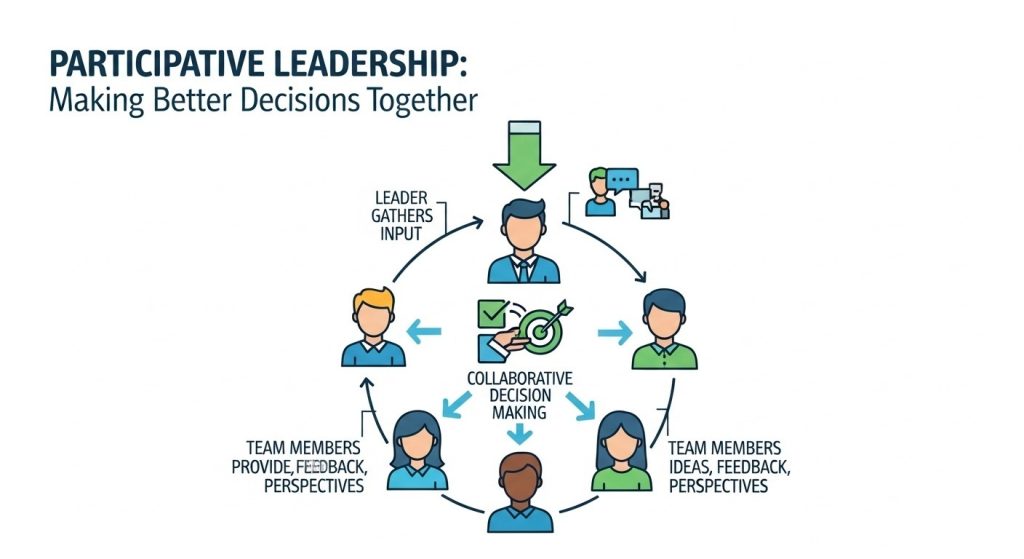
Participative leadership is a style where a leader involves their team members in the process of making decisions. It is not about letting everyone vote on everything. It is about gathering input, valuing perspectives, and building consensus before the leader makes the final call.
Think of it as the difference between a captain who shouts orders and a captain who gathers the crew to chart the best course together. The captain is still in charge, but they use the collective wisdom of the team to navigate.
This leadership model rests on a simple idea: people who help create a plan are more likely to believe in it and work hard to make it succeed.

The benefits of this approach can transform a team. Here are the most significant advantages.
When employees feel heard, they feel valued. This sense of value is a direct path to job satisfaction. People are not just following orders; they are contributing to a shared goal. This meets core psychological needs for autonomy and purpose. A happy team is a productive team that sticks around.
Different people have different viewpoints. When you open the floor to your team, you get a wider pool of ideas. A developer might see a technical solution you missed. A marketer might understand a customer angle you did not consider. This diversity of thought is the engine of innovation.
One person can only see so much. A team can see more. By including your team, you get to pressure-test ideas before they are put into action. They can point out potential risks, hidden costs, and better alternatives. This process leads to more robust, well-rounded, and effective decisions.
This is perhaps the most powerful advantage. When a team helps build a decision, they feel a sense of ownership over it. It becomes "our plan," not "the boss's plan." This ownership means team members will work harder to ensure the plan's success. They are emotionally invested in the outcome.
People do not leave companies; they leave bad bosses. A leader who ignores and silences their team will see high turnover. A participative leader builds loyalty and trust. Employees feel respected and are less likely to look for another job. This saves the organization huge costs in hiring and training.

For all its strengths, this style is not a magic wand. It has real drawbacks you must understand.
Gathering input, discussing options, and building consensus takes time. It is almost always faster for one person to make a quick decision. In a genuine emergency, like a fire alarm, a participative process is dangerous. Speed is the enemy of participation.
Some leaders fear they will look indecisive or weak if they ask for help. In some traditional corporate cultures, this perception can be a real problem. A leader must be confident enough to seek input without ceding their ultimate authority.
Not everyone will agree. Discussions can get heated. Without a skilled facilitator, the team can get stuck in a "decision paralysis," arguing in circles without reaching a conclusion. The leader must be able to manage this conflict and guide the group forward.
You might have a team member who is an expert in their field but hates group meetings. They may not want the pressure of decision-making. Forcing a reluctant employee to participate can cause stress and resentment.
Some decisions are simply not for everyone. Issues like layoffs, major financial transactions, or sensitive personnel matters cannot be debated by the whole team. Sharing too much information in these cases can be irresponsible and harmful.
Knowing when to use this style is as important as knowing how. Use this simple guide.
Use Participative Leadership When:
Avoid Participative Leadership When:
Ready to try it? Follow these steps to start practicing participative leadership today.
Step 1: Define the Problem Clearly.
Start by stating the issue that needs a decision. Be specific about the goal and any constraints, like time or budget. This focuses the discussion and sets clear boundaries.
Step 2: Choose Your Participation Method.
You do not have to involve everyone the same way every time.
Step 3: Facilitate an Open Discussion.
Create a safe space for sharing ideas. Your job is to listen, ask questions, and ensure everyone has a chance to speak. Do not judge ideas prematurely. Use a whiteboard to capture all thoughts visually.
Step 4: Make and Communicate the Final Decision.
This is the most critical step. After gathering input, you must make the decision. Explain your choice to the team, acknowledging their contributions. This shows you truly listened and closed the loop, building trust for the next time.
This style is perfectly suited for today's challenges.
If your leader uses this style, your job is to step up. Be prepared to share your honest ideas. Listen respectfully to your colleagues. Be committed to the final decision, even if it was not your personal favorite. The system only works with active, responsible participation from everyone.
In democratic leadership, the team often votes, and the majority wins. In participative leadership, the leader gathers input but retains the responsibility for making the final decision. It is less about voting and more about consulting.
Yes, but it often works best at the team or department level. Large, organization-wide decisions may use representative participation, like through a committee or employee representatives who provide input to senior leadership.
Decisions about team processes, project planning, solving complex problems, and setting team goals are ideal. These benefit from team knowledge and require strong commitment for implementation.
A good leader facilitates. You can gently interject by saying, "Thank you for those ideas, John. I'd like to hear what others think." Set ground rules at the start, like "one person at a time," to ensure a balanced conversation.
There is no single "best" leadership style. The most effective leaders are flexible. They use a participative style for complex, team-oriented problems and a more directive, autocratic style in emergencies or when clear, non-negotiable instructions are needed.
Participative leadership is a powerful tool for building a resilient, innovative, and loyal team. Its advantages in employee engagement and decision quality are profound. However, its disadvantages in speed and potential for conflict mean it is not for every situation.
The best leaders are not just one thing. They have a toolkit of styles and the wisdom to know which one to use.
Ready to expand your leadership toolkit? Explore our comprehensive guide on Modern Leadership Styles for High-Impact Teams to master other essential approaches like transformational, servant, and situational leadership. Learn how to blend these styles to meet any challenge and lead your team to peak performance.
By Dennis Ondrejka
This inspiring guide re-imagines leadership as an act of service rooted in empathy, humility, and purpose. Blending academic insight, personal stories, and practical tools, Servant Leadership equips readers to lead with heart and integrity-whether in the classroom, the boardroom, or everyday life. Drawing on timeless spiritual wisdom and modern research, Thibodeau and Ondrejka show how leading by serving can transform individuals, teams, and entire organizations. This is leadership as it was meant to be: good work, sacred work, our work.
