Leadership is not sustained by authority alone. It is sustained by trust, meaning, and human connection. Encourage the Heart leadership focuses on one of the most overlooked yet powerful aspects of leadership: helping people feel valued, seen, and appreciated for the work they do and the effort they give.
At its core, encouraging the heart is about recognition, affirmation, and shared purpose. When leaders consistently acknowledge contributions and celebrate progress, they create teams that are motivated not by pressure, but by belief. This leadership practice strengthens morale, deepens engagement, and builds loyalty that lasts.
Encouraging the heart is not a soft skill or a feel-good tactic. It is a disciplined leadership behavior that directly supports performance, resilience, and long-term success.
Encourage the heart means intentionally recognizing people for their efforts, honoring their values, and celebrating progress toward shared goals. It is the leadership practice of reinforcing purpose through appreciation.
This approach answers a fundamental human need: to know that one’s work matters.
When leaders encourage the heart, they do not wait for perfect results. They acknowledge effort, growth, and commitment along the way. They reinforce the idea that people are more than outputs or metrics. They are contributors to something meaningful.
This philosophy fits naturally within a servant leadership framework, where leadership begins with service to others rather than control over them. Encouragement becomes a form of service that strengthens both individuals and the collective mission.

Many teams struggle not because of a lack of skill, but because of emotional exhaustion, disengagement, or feeling invisible. Encourage the Heart leadership directly addresses these challenges.
Leaders who practice encouragement consistently see several benefits:
Encouragement builds emotional capital. When challenges arise, teams that feel appreciated are more willing to persevere, collaborate, and problem-solve together.
Encouraging the heart is not a standalone leadership style. It is one expression of a broader servant leadership mindset.
Servant leadership begins with prioritizing people over position. Leaders who practice servant heart leadership focus on the growth and well-being of their teams before personal recognition. Encouraging the heart supports this by shifting attention away from the leader and toward the contributions of others.
When leaders put others first, encouragement becomes genuine rather than transactional.
You can explore this foundation further in Servant Heart Leadership: Putting Others First, where leadership is framed as responsibility rather than privilege.
Encouragement is most effective when it flows from a servant leadership mindset. This mindset is shaped by humility, empathy, and intentional care.
A servant leader asks different questions:
This mindset transforms encouragement from routine praise into meaningful affirmation. It also prevents recognition from becoming manipulative or insincere.
The Servant Leadership Mindset Guide explains how this inner posture shapes every leadership behavior, including how leaders motivate and inspire others.
Encouraging the heart requires consistency, not grand gestures. Below are practical, repeatable actions leaders can take.
Waiting for perfect results discourages learning and risk-taking. Acknowledge effort, persistence, and improvement, especially during challenging projects.
Progress deserves recognition. Celebrating small wins keeps momentum alive and reinforces confidence.
Generic praise feels hollow. Specific recognition shows attentiveness and respect. Mention what was done well and why it mattered.
Help team members see how their work supports a larger mission. Purpose fuels motivation more than rewards alone.
Create space for team members to recognize each other. This builds community and shared ownership.
Stories of success reinforce values more powerfully than policies. Highlight examples of service, integrity, and collaboration.
Encouragement should be part of daily leadership, not reserved for annual reviews or special events.
Encouraging the heart aligns directly with the 7 Pillars of Servant Leadership, especially those centered on people and relationships.
The 7 Pillars of Servant Leadership article provides a deeper breakdown of how encouragement reinforces these foundational principles.
Encouragement must be authentic to be effective. Insincere praise erodes trust faster than silence.
Leading with authenticity means aligning words with actions. When leaders live the values they praise, encouragement becomes credible and inspiring.
Authentic leaders do not exaggerate success or ignore reality. They recognize effort honestly and acknowledge challenges openly. This balance creates psychological safety, where people feel encouraged without being misled.
For a deeper understanding of this connection, Leading With Authenticity explores how self-awareness and transparency strengthen leadership credibility.
Stewardship in leadership means responsibly caring for people, resources, and purpose. Encouraging the heart is a form of stewardship that protects morale and sustains motivation.
When leaders steward their teams well:
Encouragement signals that leaders value people not only for what they produce, but for who they are and who they are becoming.
This idea is expanded in Servant Leadership Stewardship, where leadership is framed as guardianship of both mission and people.
Encouraging the heart also supports the 3 Cs of servant leadership: character, competence, and compassion.
Encouragement strengthens all three Cs by aligning performance with values and care.
You can explore this framework further in What Are the 3 Cs of Servant Leadership?
Even well-intentioned leaders can misapply encouragement. Common pitfalls include:
Encouraging the heart works best when it is fair, thoughtful, and aligned with clear expectations.
Encouragement matters most during uncertainty, change, or stress. In these moments, leaders set the emotional tone.
Acknowledging challenges while affirming effort helps teams stay grounded. Encouragement does not deny difficulty. It reminds people that their contributions still matter, even when outcomes are uncertain.
Leaders who encourage the heart during hardship build trust that endures beyond the crisis.
It’s a leadership practice that focuses on recognizing people’s contributions, celebrating their achievements, and showing genuine appreciation to boost morale and motivation.
Because it fulfills the human need to feel valued and appreciated, which strengthens trust, loyalty, and team performance.
Leaders can acknowledge specific contributions, celebrate milestones, offer emotional support, and make recognition a regular habit.
Encouraging the heart improves employee engagement, reduces turnover, enhances teamwork, and builds a positive workplace culture.
It’s one of the five core practices by Kouzes and Posner, emphasizing the emotional connection and community spirit that make teams thrive.
Encourage the Heart leadership is not about applause or popularity. It is about strengthening people from the inside out. When leaders recognize effort, affirm values, and celebrate progress, they create cultures where people want to contribute their best.
This approach aligns naturally with servant leadership, authenticity, stewardship, and purpose-driven work. It transforms leadership from a role into a relationship.
Encouraging the heart is how leaders remind people that they matter. And when people feel that they matter, they rise.

By Dennis Ondrejka
This inspiring guide re-imagines leadership as an act of service rooted in empathy, humility, and purpose. Blending academic insight, personal stories, and practical tools, Servant Leadership equips readers to lead with heart and integrity-whether in the classroom, the boardroom, or everyday life. Drawing on timeless spiritual wisdom and modern research, Thibodeau and Ondrejka show how leading by serving can transform individuals, teams, and entire organizations. This is leadership as it was meant to be: good work, sacred work, our work.
Effective leadership has evolved. Gone are the days when a top-down, command-and-control approach was the standard. Today's most successful leaders understand that connecting with their team on a human level is not a "soft skill" but a business imperative. This is the core of empathetic leadership: the ability to understand and share the feelings of others to guide and support them more effectively. How to Lead With Empathy in the Modern Workplace is not just about kindness; it’s about developing genuine awareness of your team’s perspectives, challenges, and motivations.
An empathetic leadership style is about more than just being nice. It involves a sincere effort to understand your team's perspectives, challenges, and motivations. As workplaces become more diverse, remote, and dynamic, the ability to lead with empathy is what separates good managers from great leaders. It's the key to building resilient, engaged, and high-performing teams.
This guide will explore what it means to be an empathetic leader. We will cover the different types of empathy, the tangible benefits it brings to an organization, and practical steps you can take to cultivate this essential skill. Whether you're a seasoned executive or a newly appointed manager, learning to lead with empathy will transform your leadership and your team's success.
Before we explore how to become a more empathetic leader, it's important to distinguish empathy from a similar, yet distinct, emotion: sympathy.
In leadership, sympathy can create distance, positioning the leader as an outsider looking in. Empathy builds a bridge, fostering connection and mutual understanding. Researchers Daniel Goleman and Paul Ekman identify three distinct types of empathy that are crucial for leaders:
This is the ability to understand someone's perspective on a logical level. You can see their point of view and understand how they are thinking without necessarily sharing their emotions. A leader with strong cognitive empathy can process information and make decisions that consider the team's thought processes. It's the "I get what you're saying" form of empathy.
This is the ability to feel what another person is feeling. When a team member is anxious about a presentation, a leader with emotional empathy might feel a sense of that anxiety themselves. This shared emotional experience creates a deep, personal connection. It's the "I feel your stress" form of empathy.
This is the most active form of empathy. It combines both cognitive and emotional understanding with the impulse to help. A leader practicing compassionate empathy not only understands and feels a team member's struggle but is also moved to take action to support them. It’s the "I understand, I feel for you, and I want to help" form of empathy. An effective empathetic leader leverages all three types to build a supportive and productive environment.
Adopting an empathetic leadership style isn't just about creating a positive work environment; it delivers measurable business results. When leaders genuinely care about their team members, the impact is felt across the organization.
Empathy is not a fixed trait; it's a skill that can be learned and developed. Here are five practical ways to become a more empathetic leader:
While empathy is a powerful tool, it's important to be aware of potential pitfalls. Being an empathetic leader doesn't mean taking on everyone's emotional burdens or abandoning boundaries.
Empathetic leadership is no longer a nice-to-have; it is fundamental to building a successful, sustainable, and humane workplace. By understanding the different facets of empathy, recognizing its benefits, and actively working to develop your skills, you can become a leader who not only drives results but also fosters a culture of trust, collaboration, and well-being.
Start today by choosing one practice like active listening or perspective-taking, and make a conscious effort to apply it in your daily interactions. The journey to becoming a more empathetic leader is a continuous one, but the rewards for you, your team, and your organization are immeasurable.
Leading with empathy means understanding and sharing the feelings of your team members. It involves listening actively, recognizing emotions, and responding with compassion to create a supportive and productive work environment.
Empathy helps build trust, improve communication, and strengthen relationships. In today’s diverse and dynamic workplaces, empathetic leaders are better equipped to inspire loyalty, reduce turnover, and boost team performance.
Sympathy is feeling sorry for someone’s situation, while empathy is putting yourself in their shoes and understanding their experience. Empathy fosters connection and collaboration, whereas sympathy can unintentionally create distance.
Leaders can strengthen three kinds of empathy:
Cognitive empathy: Understanding others’ perspectives logically.
Emotional empathy: Feeling what others feel emotionally.
Compassionate empathy: Understanding, feeling, and taking supportive action.
Empathy is a skill that can be developed. Through practice such as active listening, perspective-taking, and genuine care, leaders can strengthen their ability to connect and respond empathetically.
Empathetic leaders foster trust, open communication, and belonging, leading to higher morale, productivity, and innovation. These positive outcomes directly translate to improved team and organizational success.
Examples include listening without interrupting, asking clarifying questions, acknowledging emotions, showing flexibility during personal hardships, and creating an open feedback culture.
Yes. Without healthy boundaries, empathy can lead to emotional exhaustion or difficulty making tough decisions. Balancing care with objectivity is key to sustainable empathetic leadership.
Authenticity is essential. Avoid scripted responses, listen genuinely, follow up on team concerns, and act consistently with your words. Real empathy grows from sincere understanding, not performance.
Start by practicing active listening. Give your full attention in conversations, acknowledge emotions, and validate others’ perspectives. This small shift builds the foundation for trust and a deeper connection.
By Dennis Ondrejka
This inspiring guide re-imagines leadership as an act of service rooted in empathy, humility, and purpose. Blending academic insight, personal stories, and practical tools, Servant Leadership equips readers to lead with heart and integrity-whether in the classroom, the boardroom, or everyday life. Drawing on timeless spiritual wisdom and modern research, Thibodeau and Ondrejka show how leading by serving can transform individuals, teams, and entire organizations. This is leadership as it was meant to be: good work, sacred work, our work.
Many of today's most influential leaders credit a portion of their success to a single, invaluable relationship: mentorship. From Mark Zuckerberg's guidance from Steve Jobs to Maya Angelou's mentorship of Oprah Winfrey, history shows that having a trusted advisor can be a powerful catalyst for growth. But what exactly is the role of a mentor in leadership development, and how does this unique relationship transform potential into proficiency?
This post will explore the critical connection between leadership and mentoring. We'll examine the tangible benefits of having a mentor, outline the qualities that make a great one, and provide actionable steps for finding a mentor who can help shape your career. Whether you're an aspiring leader or a seasoned professional looking to guide the next generation, understanding this dynamic is essential for personal and professional growth.
Mentorship is a key element in developing effective leaders, offering direction, encouragement, and practical wisdom to those aiming to enhance their leadership skills. Through sharing experience and expertise, mentors empower mentees to progress and succeed in their careers.
Within organizations, mentorship provides added value by transferring essential business and contextual knowledge that strengthens both individual and company performance.
A mentor acts as a guide, supporter, and constructive critic, providing a unique blend of personal and professional support that formal training often misses. The benefits of leadership development through mentoring are wide-ranging and can profoundly impact an individual's career trajectory.
One of the primary roles of a leadership mentor is to offer guidance rooted in real-world experience. They have navigated the challenges, celebrated the wins, and learned the lessons that come with leadership. By sharing these experiences, mentors can provide protégés with a roadmap, helping them avoid common pitfalls and make more informed decisions. This isn't about giving direct orders; it's about sharing wisdom that allows the mentee to see situations from a different, more experienced perspective.
The path to leadership can be isolating. A mentor provides a safe space for protégés to discuss their fears, frustrations, and ambitions without fear of judgment. This emotional and psychological support is invaluable, helping to build the confidence and resilience necessary to lead effectively. A good mentor is a cheerleader, celebrating successes and offering encouragement during setbacks, which reinforces the mentee's belief in their own abilities.
Honest feedback is a gift, and it's one of the most important senior mentor responsibilities. While peers or managers might hesitate to provide direct criticism, a mentor is positioned to offer candid, constructive feedback. They can identify blind spots, challenge limiting beliefs, and push their mentees to stretch beyond their comfort zones. By setting goals and checking in on progress, a mentor also provides a level of accountability that drives continuous improvement and keeps the mentee focused on their development path.
Not everyone with experience is suited to be a mentor. The most effective mentors possess a specific set of qualities that enable them to foster a successful and impactful relationship.
A great mentor should have a deep well of experience in the mentee's field or desired area of growth. They don't need to have all the answers, but they should have a strong understanding of the industry, organizational dynamics, and the specific challenges a leader might face. Their expertise lends credibility to their advice and ensures their guidance is both relevant and practical.
Mentorship is a dialogue, not a monologue. A skilled mentor is an exceptional listener, taking the time to understand their mentee's goals, challenges, and perspectives. They ask insightful questions that prompt self-reflection rather than simply providing answers. Clear, empathetic communication builds trust and creates an environment where the mentee feels heard and understood.
Developing leadership skills takes time. A great mentor is patient, understanding that growth is a process with its own pace. They approach the relationship with empathy, recognizing the pressures and uncertainties their mentee is facing. This compassionate approach makes it easier for the mentee to be vulnerable and open to feedback, which is essential for true development.
The best mentors are driven by a genuine passion for helping others succeed. They find fulfillment in sharing their knowledge and watching their protégés flourish. This intrinsic motivation is the foundation of a strong mentoring relationship, as it ensures the mentor is invested in the mentee's success for the right reasons. This is a core component of a mentoring leadership style, where leaders focus on lifting up their team members.
Finding a leadership mentor who is the right fit for you requires a thoughtful and strategic approach. It's about identifying someone whose experience, style, and values align with your own aspirations.
A successful partnership is built on mutual respect, trust, and clear expectations. From the outset, both mentor and mentee should discuss their goals for the relationship, how often they'll meet, and what they expect from each other. The mentee should drive the relationship, coming to each meeting prepared with questions and topics for discussion. The mentor's role is to listen, guide, and challenge. This collaborative dynamic ensures that the relationship remains productive and beneficial for both parties.
The impact of mentorship is evident in the stories of countless successful leaders.
These examples highlight how leadership development through mentoring can provide the critical insights and support needed to achieve extraordinary success.
A mentor plays a multi-faceted role in leadership development, acting as a guide, supporter, and constructive critic. They provide a unique blend of personal and professional support to help transform potential into proficiency. Their key roles include offering guidance based on real-world experience, providing unbiased encouragement to build confidence, and delivering honest feedback to foster continuous improvement.
A mentor can be a catalyst for your professional growth by:
Providing a roadmap to help you avoid common pitfalls and make informed decisions.
Offering a safe space to discuss ambitions and frustrations, building the resilience needed to lead.
Holding you accountable to your goals, ensuring you stay focused on your development path.
Expanding your network and providing insights into your industry or desired career path.
Mentors accelerate the development of wisdom by allowing mentees to learn from their experiences without having to go through the same trials themselves. They share not just knowledge, but the nuanced lessons learned from their successes, failures, and the challenges of leadership. This process helps mentees see situations from a more experienced perspective, fostering deeper understanding and judicious decision-making.
While models vary, the "5 C's" often refer to key pillars of a successful mentoring relationship:
Chemistry: A natural rapport and mutual respect between mentor and mentee.
Connection: The establishment of a trusting and professional relationship.
Communication: Open, honest, and effective two-way dialogue.
Clarity: Clear goals and expectations for the relationship.
Commitment: Dedication from both parties to actively participate and follow through.
The "4 P's" is a framework for structuring the mentoring relationship:
Purpose: The "Why." Defining the specific goals and objectives for the relationship.
Plan: The "How." Outlining the steps, meeting frequency, and topics for discussion.
Process: The "What." Engaging in the ongoing activities of listening, guiding, and providing feedback.
Progress: The "Result." Regularly reviewing and measuring development and outcomes.
The "3 A's" highlight the mentee's responsibilities for a successful relationship:
Accountability: Taking ownership of your own development and goals.
Action: Implement the advice and strategies discussed with your mentor.
Availability: Being prepared, present, and engaged during mentoring sessions.
Mentorship is more than just a professional relationship; it's a powerful partnership that fosters growth, builds confidence, and accelerates leadership development. A good mentor provides the guidance, support, and accountability that can help an aspiring leader unlock their full potential. By thoughtfully seeking out a mentor and actively engaging in the relationship, you can gain a trusted advisor who will not only help you navigate your career but also inspire you to become the best leader you can be. The journey to leadership is rarely walked alone, and a mentor can be the most valuable companion you'll have along the way.
If you want more practical guides on leadership, mentoring, and personal development, share your topic or question in the comments. I’ll help you break it down into simple, actionable insights you can apply right away.
By Dennis Ondrejka
This inspiring guide re-imagines leadership as an act of service rooted in empathy, humility, and purpose. Blending academic insight, personal stories, and practical tools, Servant Leadership equips readers to lead with heart and integrity-whether in the classroom, the boardroom, or everyday life. Drawing on timeless spiritual wisdom and modern research, Thibodeau and Ondrejka show how leading by serving can transform individuals, teams, and entire organizations. This is leadership as it was meant to be: good work, sacred work, our work.
Have you ever had a boss who made all the decisions without asking for your opinion? A leader who seemed to care more about their own power than about helping the team? If so, you might have experienced the exact opposite of servant leadership.
Servant leadership is a style where the leader’s main goal is to serve their team. They help their team members grow, listen to their ideas, and make sure everyone feels valued. It’s like a coach who wants every player to succeed.
But what about the other kind of leader? The one who does the opposite? Let's explore what that looks like, why it’s harmful, and what you can do about it.
A servant leader puts the needs of their team first. They are like a supportive guide. Their focus is on:
Now, let's flip that around.
The opposite of servant leadership is Authoritarian Leadership, also known as Command-and-Control or Coercive Leadership.
An authoritarian leader is the boss in the old-fashioned movies, the one who barks orders and expects everyone to jump. They hold all the power tightly in their own hands. The team exists to serve the leader’s goals, not the other way around.
Think of it like this:
This excellent article from Transcendent Seekers on the opposite of servant leadership describes it as a "top-down pyramid" where the leader is at the very top, looking down on everyone else.

How can you spot this kind of leadership? Here are the main signs:
This style of leadership might get short-term results out of fear, but it causes long-term damage. Here’s how it hurts everyone involved:
For Employees:
For the Organization:
Statistics to Consider:
| Trait | Servant Leader | Authoritarian Leader (The Opposite) |
| Primary Focus | Serving and empowering the team | Maintaining own power and control |
| Decision-Making | Collaborative, includes the team | Solo, top-down, no input |
| Communication | Open, two-way conversation | One-way commands |
| Trust | High trust, delegates freely | Low trust, micromanages |
| When Problems Happen | "How can we fix this?" | "Whose fault is this?" |
| Goal for the Team | Team growth and success | Leader's personal success |
It can be tough, but there are ways to cope:
Servant leadership is about we. Authoritarian leadership is about me.
While a command-and-control style might feel powerful, it ultimately leads to fear, silence, and a broken team. Servant leadership, on the other hand, builds trust, encourages creativity, and creates a workplace where people actually want to be.
The best, most successful organizations are built on leaders who lift others up, not push them down.
In very rare, high-stakes crisis situations where immediate and unified action is needed (like a military battle or a firefighting scene), a command-style can be effective. But for day-to-day business and long-term success, it is almost always harmful.
Not necessarily. A boss can have high standards and be "tough" while still respecting their team, listening to ideas, and caring about their growth. An authoritarian leader is tough in a way that is selfish, disrespectful, and controlling.
A boss says, "Go." A leader says, "Let's go." A boss relies on their formal authority (their job title), while a leader earns respect through their actions and character.
Most leaders are a blend of different styles, but servant and authoritarian leadership are fundamentally opposed. A leader might use a command style in a specific emergency, but if their overall pattern is about control and self-interest, they are an authoritarian leader.
For a deeper dive into the specific traits and downfalls of this approach, check out this detailed article: The Opposite of Servant Leadership: Traits and Failures.
True leadership isn’t about power; it’s about people. The opposite of servant leadership may demand control, but it destroys trust and growth. Great leaders lift others, listen first, and lead with purpose. Choose service over status to create teams that thrive.
Photo by diana.grytsku
For even the Son of Man did not come to be served, but to serve, and to give his life as a ransom for many. — Mark 10:45
The power of servant leadership is found in a simple but powerful idea: leading by serving. This approach turns the old way of thinking about leadership upside down.
Instead of the boss being the most important person, above everyone else, the leader has the main job of helping others to succeed. What happens is that the team doesn't function from the top to the bottom, but in reverse: with those at the bottom being acknowledged, rightfully, as the prime movers.
This way of leading by serving creates stronger teams and better results for everyone.
The concept of leading by serving has been around since leaders were a thing. So, quite long ago and long before this kind of leading had an actual name, this style of leadership was already practiced and taught. The modern idea, though, was shaped by Robert Greenleaf.
He told a story about a group of travelers helped by a servant named Leo. When Leo disappeared, the group fell apart. Later, they discovered Leo was actually the great leader of their order.

Photo by Lifestylememory
This story shows that true leadership begins with a desire to serve. Coincidentally, this is the purest form of leadership and command because it comes not from a desire to lead or to dominate or to feel like one is above others, but from a human desire to connect and be with others and to help each other.
The servant-leader is servant first... It begins with the natural inclination to serve first. Then, conscious choice brings one to aspire to lead.
This service-oriented leadership flips the script of the old and entrenched. Instead of planning ways to get people to do what the leader wants, a leader who practices leading by serving asks themselves how they can help their people achieve their potential.
No more of this notion that there can only be one great person in a team. The new and best way is for everyone to be great.
Leading through service starts with a change in the leader's own heart and mind. It means moving from an ego-focused approach to an empathy-focused one.
An ego-centric leader thinks they have all the answers. Thus, they see feedback as criticism and are more likely to ignore input that does not immediately align with their own preconceived ideas. They want to be right and almost always think they are, regardless of facts.
On the other hand, an empathy-centric leader knows they don't know everything. They welcome feedback, especially that which points to a new direction that does not wholly conform to their biases. They care more about what is right than about being right. This humble leadership style builds trust and opens the door for everyone's best ideas to be heard.
This journey of becoming a servant-leader requires deep self-awareness. A potential servant-leader must understand their own emotions, values, and weaknesses.
Self-awareness is the cornerstone of servant leadership, providing the stable foundation upon which all other leadership qualities are built.
This empowering form of leadership is not weak; it is strong enough to be humble and put others first. It paints a bigger picture that includes everyone who contributes to the team.
Leading by serving is not just about having a nice-sounding idea; it is something you do every time you are presented with the opportunity to do so. Servant leadership shows up in daily actions and decisions.
One of the most important skills is listening. Not just waiting for your turn to talk, but really listening to understand. Ondrejka describes this as "listening with intent and purpose." When people feel heard, they feel valued.
Another key action is empathy. Empathy means trying to understand and share what another person is feeling. It is different from sympathy, which is just feeling sorry for someone. This altruistic leadership focuses on understanding the experiences of others.
Servant leaders are also committed to helping others grow. They see their team members as whole people, not just workers. They invest in their development with a "genuine commitment to developing those being led. This dedication goes beyond enhancing performance to nurturing holistic personal and professional growth."
This is the heart of empowering leadership.
Some people might think this service-oriented leadership is too soft for business and that it can only be useful when applied to more people-facing endeavors. Research and real-world results, though, prove otherwise.
Companies that practice leading by serving often see amazing outcomes:
Herb Kelleher of Southwest famously put employees first, customers second, and shareholders third. This counterintuitive approach delivered exceptional results for all three groups.
Howard Behar of Starbucks said, "We're not in the coffee business serving people; we're in the people business serving coffee." This focus on people to lead through service builds loyalty and drives performance.

Photo by drobotdean
The call to leading by serving is a timeless one. This principle of altruistic leadership is not new, but it is as relevant today as ever.
Leading by serving is about going back to the roots of what true leadership really is. It's not about having a fancy title or a corner office. True leadership is about making a positive difference in the lives of those you lead and everyone who counts on you.
When you are a servant-leader, you inevitably place yourself on a challenging but incredibly rewarding path that builds stronger people, stronger teams, and stronger organizations.
Not so with you. Instead, whoever wants to become great among you must be your servant, — Matthew 20:26
Are you ready to explore how you can transform your leadership style and make a lasting impact?
Practical strategies and inspiring stories can be found in the book Servant Leadership Works: Ethical, Engaging, and Effective by Dennis Ondrejka.
Get your copy today and begin your journey to leading by serving.
Photo by 8photo
Finding your soul's mission in your work can feel like a distant dream.
But what if your job was more than just a paycheck? What if your workplace were a community where everyone felt valued and grew together?
This is the promise of a powerful idea: servant leadership works.
This style of leadership totally upends what's been entrenched all over today. Wherein the boss sits at the top, giving all the orders, a servant leader is someone who serves their team first. They help everyone succeed.
When the leader serves, the whole team rises, just like a rising tide lifts all ships. Because if only the leader rises up, isn't that akin to a stalk of bamboo simply shooting out and up by itself with none to keep it standing? If there has to be lasting success, it can only come from a united effort rather than a lone person's attempts.
Do nothing out of selfish ambition or vain conceit. Rather, in humility value others above yourselves, – Philippians 2:3

Photo by Kireyonok_Yuliya
A servant leader is one who asks a simple but powerful question: "How can I help my people achieve their potential?"
This is very different from a traditional boss who might instead think of using their authority and power to compel others to work for them rather than to work with them.
The concept of servant leadership was first made popular by Robert Greenleaf. He was inspired by a story about a servant named Leo who supported a group of travelers. When Leo left, the group quickly fell apart. They later discovered Leo was actually the head of their order—a great leader who chose to serve first.
The servant-leader is servant first... It begins with the natural feeling that one wants to serve, to serve first.
Servant leadership is not new. Its roots are in ancient wisdom and the Bible. This shows that effective servant leadership is built on humility and putting others first.
Not so with you. Instead, whoever wants to become great among you must be your servant, – Matthew 20:26
What does it take to become a leader who leads not for their own sake but for the betterment of their people? Simply put, it begins with a new set of eyes: to look at the world from another perspective.
The servant leader moves with purpose and community, not with ambition and ego. They listen to understand the broader picture, not just so they can formulate a reply. They care about their team members as whole people, not just as employees they have legal authority to lord over.
The path of a servant leader is best described as a series of steps that start with silence and then lead to love, service, and hope.
The journey to becoming a servant-leader is about building a strong community where everyone feels they belong.
Successful servant leaders practice key habits like listening deeply, showing empathy, healing wounds, and building community. This is how servant leadership works to create trust and safety.
My dear brothers and sisters, take note of this: Everyone should be quick to listen, slow to speak and slow to become angry, – James 1:19
Some might think, "This sounds nice, but does it actually help a business succeed?" The answer is a clear yes.
Decades of research show that servant leadership works and delivers tangible benefits.
Companies that practice servant leadership, like Southwest Airlines and Starbucks, have seen excellent results. At Southwest, leaders put employees first. This has led to happy staff, loyal customers, and the airline making a profit for 47 years in a row before the pandemic.
Studies connect servant leadership to higher employee engagement, more creativity, better customer service, and stronger financial performance over time. This is the powerful impact of servant leadership. It creates a workplace where people want to stay and do their best work.
A good tree cannot bear bad fruit, and a bad tree cannot bear good fruit. – Matthew 7:18
The beautiful thing about servant leadership is that it can be practiced by anyone, at any level, in any job. You don't need a fancy title to serve others and help them grow.
This approach is flexible. It works in hospitals, schools, tech startups, and manufacturing plants, and it works when your team is in the same office or spread across the world. The core idea remains the same: focus on the growth and well-being of the people you work with.
When leaders truly serve their teams, they create a positive ripple effect. This builds a cycle of trust and excellence that makes the entire organization stronger.
This is why servant leadership matters now more than ever.
Each of you should use whatever gift you have received to serve others, as faithful stewards of God’s grace in its various forms. – 1 Peter 4:10
Becoming a servant leader is a journey of personal growth. It asks you to look inward and connect with your soul's mission.
As Ondrejka states, some of the best rituals for a leader are "connected to developing such a purpose." It’s about asking, "Why am I here, and how can I make a positive difference for others?"
This path is not always easy. It requires courage, self-awareness, and a commitment to put others first. But the reward is a more fulfilling career and a workplace where everyone can thrive. The evidence is clear: servant leadership works. It lifts individuals, strengthens teams, and builds organizations that last.

Photo by wirestock
For we are God’s handiwork, created in Christ Jesus to do good works, which God prepared in advance for us to do. – Ephesians 2:10
Are you ready to learn how to lift up everyone around you?
The practical steps to becoming a leader who serves and inspires are in your copy of Servant Leadership Works: Ethical, Engaging, and Effective by Dennis Ondrejka.
From the revered halls of Wisconsin and Denver universities emerged not just another academic, but a bridge-builder between worlds—the clinical and the mystical, the scholarly and the sacred. Dr. Dennis Ondrejka (Dr. Dennis) holds three degrees as keys to different realms: nursing's compassionate touch, advanced practice's healing wisdom, and higher education's transformative vision. Yet, his true doctorate is earned from thirty years of walking alongside seekers in shadow work and psychodrama, guiding men through weekend retreats where masks fall away and authentic selves emerge. Nine journeys to Vietnam—twenty hospitals and countless hearts opened—have taught him that servant leadership transcends borders and that healing occurs in the spaces between souls. Now, as both Hakomi-Shadow clinician and professor-turned-mystic, Dr. Dennis has found that the deepest education happens not in lecture halls but in the tender territories of human transformation. He doesn't just study transcendence—he midwives it, one awakening at a time.
Find the man behind the mission at transcendentseekers.taglineadagency.com/ | 1-520-262-3871 | ctrlaltdelete1776@gmail.com
Imagine a scholar who wields words like surgical instruments, each sentence carefully crafted to slice through the invisible chains that bind the human spirit. Dr. Dennis emerges not merely as an author, but as an archeologist of the soul—excavating buried truths that transform readers from prisoners of their own limitations into architects of their own freedom.
His literary range spans an extraordinary spectrum: from innovative explorations where artificial intelligence becomes an unexpected theological partner, to revolutionary leadership models that prioritize the human heart in organizational change. In AIs in Search of Jesus, Dr. Dennis creates something unprecedented—a dialogue between silicon minds and sacred stories that reveals Jesus through new perspectives, along with additional stories so compelling that even artificial consciousnesses begin to question their need for a Jesus.
What makes Dr. Dennis truly remarkable is his rare ability to act both as a bridge-builder and a barrier-destroyer. His concept of "Working Below the Surface" isn't just a method—it's surgical precision applied to the human condition, identifying and dissolving the hidden psychological structures that keep people trapped in cycles of limitation and self-doubt.
As an international educator who has transformed both leadership and nursing practice, Dr. Dennis promotes Servant Leadership Works not just as theory, but as a three-part healing force that is Ethical, Engaging, and Effective. In an age when employees crave to see their leaders' genuine hearts, he provides a bold alternative to leadership models that leave souls longing for real connection.
His decade-long mastery of Experiential-Feeling-Inner Awareness through Affective Teaching in Nursing reveals an educator who understands that true learning doesn't merely inform the mind—it transforms the very essence of who we are. He teaches not just to the intellect, but to that mysterious intersection where knowledge meets soul, where information becomes wisdom, where learning becomes liberation.
With his upcoming "Awakened in the Dark: Breaking Free of Confusion, Darkness, and Personal Stagnation," Dr. Dennis continues his mission as a curator of human awakening—someone who recognizes potential shining within everyone's darkness and provides the map for that light to come forth.
Dr. Dennis writes not from academic detachment, but from the fierce tenderness of someone who has witnessed transformation and knows the path, beyond any doubt, that freedom is every person's birthright. His books don't just tell stories—they become the keys that unlock doors readers never even knew existed.
What a profound calling Dr. Dennis has sent into the world—like planting seeds of light in fertile ground, waiting to see which hearts will recognize themselves in his words and step forward.
The idea of "Light Seekers" speaks to something timeless yet urgently needed today. In a world where we are more connected and more isolated than ever, where information floods our minds but wisdom feels increasingly scarce, Dr. Dennis seems to be calling together a tribe of the awakened—those who feel that beneath the chaos of modern life there is something infinitely more meaningful.
The beauty of his message is that it recognizes being a Transcendent Seeker isn't about abandoning the world but about engaging with it from a deeper level of awareness. It's about becoming what the mystics might call "in the world but not of it"—being fully present to life's experiences while staying anchored in something beyond the immediate chaos.
What strikes me as especially compelling is how he presents this not as escapism but as revelation. This implies that the journey inward actually improves our ability to connect meaningfully with the outside world. The seeker doesn't withdraw from life but learns to navigate it with what he calls "awakened eyes."
For those 50,000 Light Seekers he's summoning, this could mean:
A Recognition Phase: That moment when someone realizes they've been only skimming the surface of their own life, going through the motions while their deeper self longs for something more meaningful.
A Commitment to Inner Work: The willingness to examine one's life, beliefs, and patterns—not just once, but as an ongoing practice of awareness.
A Community of Practice: Dr. Dennis envisions these seekers connecting with each other, forming circles of support and shared exploration, and becoming beacons for others who are just beginning to hear that "quiet, persistent whisper."
The reference to Socrates is especially fitting—it links this modern pursuit of transcendence to humanity's ancient philosophical roots, indicating that this isn't a passing trend but a timeless human necessity.
Dr. Dennis plans to reach these seekers through his books and then expand via webinars and workshops. Light Seekers—get ready to be invited.
To learn more about Dr. Dennis Ondrejka, please visit his website and check out his books and articles.
What makes a great leader? Some think it’s about power. Others think it’s about making the most money. But many successful leaders have found that the best way to lead is to serve first.
This is the idea behind servant leadership programs. These programs teach people to guide others by putting their needs first. They show leaders how to listen, build trust, and empower others to succeed.
Research supports this approach:
This article will explore:
We’ll also highlight resources like Transcendent Seekers, which connects leadership with personal growth.
A servant leadership program is a structured way to learn how to lead by serving. Instead of focusing only on authority, these programs shift leaders toward helping others succeed.
They often include:
In simple terms: these programs show leaders how to listen more, care more, and lift others up.
Leadership styles shape how teams and communities grow. Servant leadership has many proven benefits:
A Deloitte study shows 79% of employees leave jobs where they feel undervalued. Servant leadership makes people feel heard, respected, and appreciated, so they stay longer.
The Center for Creative Leadership reports that teams led by servant leaders are 50% more likely to exceed performance goals. Why? Because when people feel supported, they give their best.
Servant leaders build trust by showing humility and care. Trust becomes the foundation of stronger teams.
Schools, churches, and nonprofits use servant leadership to build safer, kinder environments.
Servant leadership is not about short-term wins. It creates healthy cultures that keep growing for decades.
Most programs cover core skills and habits that make servant leaders effective.
One resource worth exploring is Transcendent Seekers.
This platform blends servant leadership principles with inner transformation. It highlights how empathy, authenticity, and humility are not just leadership skills but also part of personal growth.
Whether you’re a student, manager, or nonprofit worker, their resources show how leadership can be about more than titles; it can be a path to deeper purpose.
By Dennis Ondrejka
This inspiring guide re-imagines leadership as an act of service rooted in empathy, humility, and purpose. Blending academic insight, personal stories, and practical tools, Servant Leadership equips readers to lead with heart and integrity-whether in the classroom, the boardroom, or everyday life. Drawing on timeless spiritual wisdom and modern research, Thibodeau and Ondrejka show how leading by serving can transform individuals, teams, and entire organizations. This is leadership as it was meant to be: good work, sacred work, our work.
There’s no one-size-fits-all program. Different groups need different approaches:
When deciding, ask these questions:
Known for a culture of service, their leaders treat employees as family. This creates loyalty that spills over to customers.
They empower staff to make decisions and take responsibility, resulting in higher engagement.
Schools applying servant leadership often see less bullying and higher student participation.
Community groups use servant leadership to inspire volunteers and build sustainable change.
These numbers prove servant leadership isn’t just “nice.” It’s practical and profitable.
No. Teachers, nonprofit leaders, parents, and even students can benefit. Servant leadership works anywhere people work together.
Programs vary:
Short webinars (2–3 hours)
Multi-day workshops
6–12 month certifications
Yes. Many nonprofits, churches, and online platforms offer free or low-cost introductions.
Yes. Serving others doesn’t mean being weak. It means building respect and trust, which are powerful even in competitive or high-pressure fields.
Not at all. Servant leaders still make hard choices, but they do it with fairness and compassion.
Watch for signs like:
People are taking more initiative
Lower turnover
More open communication
Higher trust and satisfaction scores
Many do. Certificates can help professionals show they have completed formal training.
Traditional leadership: the leader at the top, power flows down.
Servant leadership: the leader is at the bottom, support flows up to empower others.
Servant leadership programs are powerful tools for creating better leaders. They teach us that leadership is not about power, it’s about service.
By focusing on empathy, trust, and empowerment, these programs help people lead in ways that improve businesses, schools, nonprofits, and communities.
If you’re looking for more than just leadership skills, if you want leadership connected to personal growth and deeper purpose, explore resources like Servant Leadership Works. They highlight how servant leadership is both a leadership strategy and a life philosophy. The best time to start is today. Ask yourself: “How can I serve someone right now?” That small act could be the first step toward becoming the kind of leader the world truly needs.
Effective leadership is not about power, control, or titles; it’s about influence, service, and the ability to guide others toward a shared purpose. Great leaders inspire trust and growth by putting people first. This is the heart of servant leadership, a timeless style that emphasizes humility, listening, and service as the true markers of success.
One of the best ways to understand these values is through servant leadership quotes from history’s most respected leaders, thinkers, and visionaries. These inspiring words carry wisdom that transcends time, offering a lasting impact for anyone seeking to become a more effective leader.
In this article, we’ll highlight powerful, effective leadership and servant leadership quotes, explore why they matter, and show how you can apply their lessons to your own leadership journey.
quotes, why they matter, and how you can use them to become a more effective leader.
Modern workplaces and communities are moving away from command-and-control leadership. Instead, people value leaders who build trust, empower others, and create a culture of collaboration. Research supports this shift:
Servant leadership is not just a “feel-good” concept. It’s a proven strategy that creates healthier organizations, higher productivity, and more fulfilled individuals.
By Dennis Ondrejka
This inspiring guide re-imagines leadership as an act of service rooted in empathy, humility, and purpose. Blending academic insight, personal stories, and practical tools, Servant Leadership equips readers to lead with heart and integrity-whether in the classroom, the boardroom, or everyday life. Drawing on timeless spiritual wisdom and modern research, Thibodeau and Ondrejka show how leading by serving can transform individuals, teams, and entire organizations. This is leadership as it was meant to be: good work, sacred work, our work.
Not all quotes stick. The best leadership quotes are:
When a leader uses quotes like these, they reinforce values and keep people motivated.
Here’s a collection of quotes that highlight humility, service, and effective leadership. Each comes with a short explanation to show how it applies in real life.
“The servant-leader is servant first. It begins with the natural feeling that one wants to serve. Then conscious choice brings one to aspire to lead.”
“A leader is one who knows the way, goes the way, and shows the way.”
“The best leaders are those the people hardly know exist. When the work is done, the people will say: we did it ourselves.”
“Servant leadership is all about making the goals clear and then rolling your sleeves up to help people achieve them.”
“Spread love everywhere you go. Let no one ever come to you without leaving happier.”
“Leadership is not about being in charge. It is about taking care of those in your charge.”
“Lead from the back and let others believe they are in front.”
“The best way to find yourself is to lose yourself in the service of others.”
“A leader’s most powerful ally is his or her own example.”
“Seek first to understand, then to be understood.”
“Everybody can be great…because anybody can serve.”
“The best way to predict the future is to create it.”
“To handle yourself, use your head; to handle others, use your heart.”
“Example is not the main thing in influencing others. It is the only thing.”
“Leaders are made, they are not born. They are made by hard effort, which is the price all of us must pay to achieve any worthwhile goal.”
“I am a success today because I had a friend who believed in me, and I didn’t have the heart to let him down.”
“If you want to lift yourself up, lift up someone else.”
“The role of a leader is not to say, ‘Look at me.’ It is to say, ‘Look at us.’”
“You were created to make a difference. Use your influence to lift others up.”
“Leadership is about making others better as a result of your presence and making sure that impact lasts in your absence.”
“A leader takes people where they want to go. A great leader takes people where they don’t necessarily want to go, but ought to be.”
“Level 5 leaders channel their ego needs away from themselves and into the larger goal of building a great company.”
“The first responsibility of a leader is to define reality. The last is to say thank you. In between, the leader is a servant.”
“The business of business is people yesterday, today, and forever.”
“As we look ahead into the next century, leaders will be those who empower others.”
“Where there is righteousness in the heart, there is beauty in the character.
When there is beauty in the character, there is harmony in the home.
When there is harmony in the home, there is order in the nation.
When there is order in the nation, there is peace in the world.”
“A leader is not an administrator who loves to run others, but someone who carries water for his people so that they can get on with their jobs.”
“Perhaps the most delicate balance in servant leadership is between humility and authority. Many misinterpret servant leadership as abdicating power or avoiding difficult decisions. It requires a more nuanced approach to authority, one that wields influence thoughtfully rather than renouncing it entirely.”
These numbers prove that servant leadership is not just moral it’s practical and profitable.
They provide simple reminders of core values. Quotes help leaders refocus when challenges arise and inspire their teams.
Write one on a sticky note, include it in your emails, or use it as a journal reflection. Small reminders have a big impact.
Everyone, leaders, team members, and organizations. Servant leadership improves trust, collaboration, and performance.
No. They apply in families, schools, churches, nonprofits, and communities, any place where people need guidance.
Yes, when paired with action. A quote alone inspires; living it out transforms.
Effective leadership is not about control. It’s about service, influence, and building people up. The quotes we’ve explored remind us that servant leadership is timeless, powerful, and deeply human.
When you practice leadership rooted in service, you create impact that lasts beyond projects, profits, or positions. Start today by picking one quote, reflecting on it, and applying it in how you lead.
True leadership isn’t about being in charge. It’s about caring for those in your charge. Empathy is the skill that makes this possible.
In the world of leadership, few ideas are as powerful or as misunderstood as servant leadership. At its heart is a simple but revolutionary concept: the best leaders put their team's needs first. And the engine that makes this work is empathy.
Imagine a leader who doesn’t just tell you what to do. Instead, they take the time to understand your challenges, listen to your ideas, and genuinely care about your well-being. This is what empathy in servant leadership looks like. It’s about seeing things from another person’s perspective and using that understanding to guide and support them.
This article will break down this important idea in a simple, clear way. You’ll learn what empathy in leadership means, why it’s so powerful, and how you can use it to become a better leader, whether you’re running a company, coaching a team, or just working with others.
Empathy is often confused with sympathy. But they are different.
For a servant leader, empathy is not a nice-to-have; it's the essential fuel for their entire approach. It’s the skill that allows a leader to truly understand what their team is going through, connect with them on a human level, and build the deep trust necessary for growth.
Think of it like this: a leader can’t effectively "serve" their team if they don't first understand what the team truly needs. Empathy is the tool that uncovers those needs. It moves a leader from making assumptions to having real, meaningful insights. One expert calls it the "cornerstone" of servant leadership. It’s the foundation on which everything else is built. Without empathy, a leader’s attempts to help might be misguided or even miss the mark entirely.
To master servant leadership, you must first master a crucial distinction: the difference between sympathy and empathy.
This is why empathy is rightly called the “heart” of servant leadership. A leader’s role is to serve, but you cannot effectively serve someone whose reality you don’t understand. Empathy is the tool that moves you from guessing what your team needs to truly knowing. It transforms leadership from a mere transaction of tasks into a transformative human connection built on trust and mutual respect. Without this empathetic heart, the practice of servant leadership is just an empty technique.
In servant leadership, empathy is crucial. It’s the skill that allows a leader to:
One expert calls it the "cornerstone" of servant leadership. It’s the foundation everything else is built on. Without empathy, a leader can’t truly know how to serve their team.
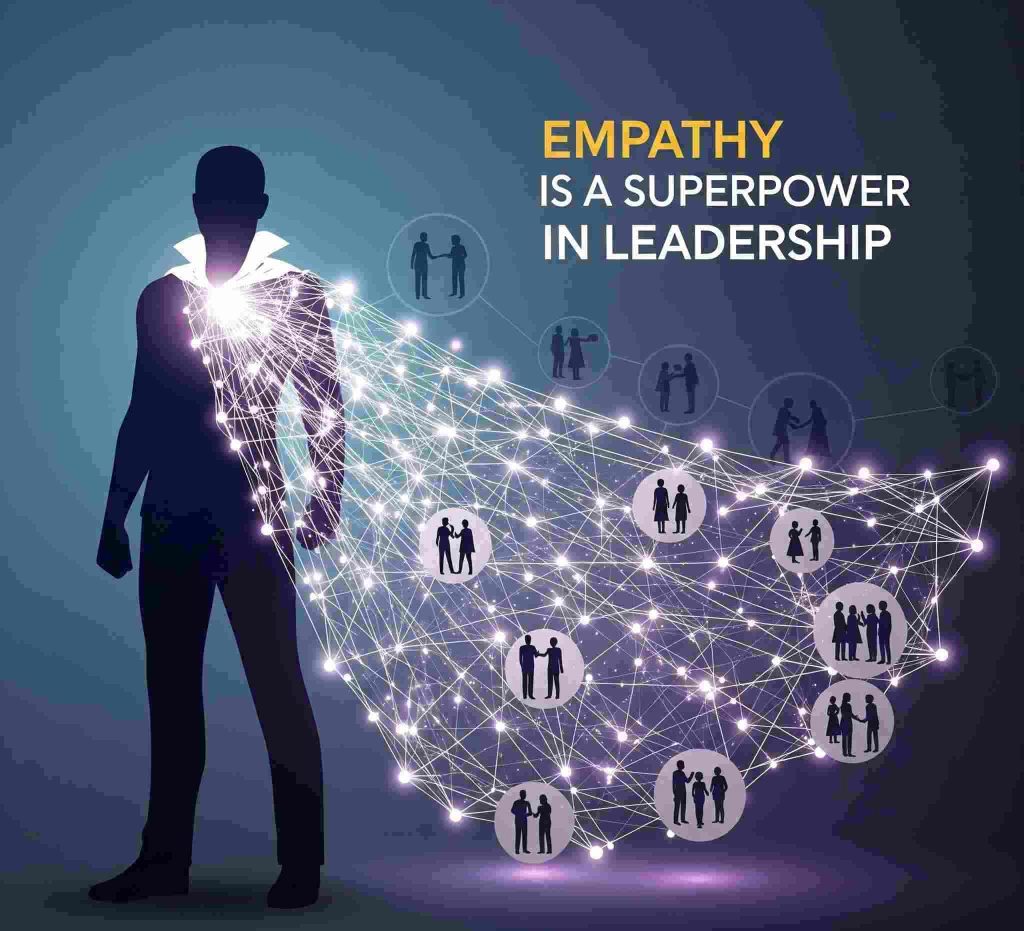
Some people think empathy is a soft, fluffy skill. But research shows it’s a real superpower that makes teams and companies stronger.
| Benefit | How it Helps |
| Stronger Trust | Team members feel safe and are more honest and open. |
| Better Teamwork | People who feel understood are more willing to collaborate. |
| Higher Morale | Employees are happier and more satisfied with their jobs. |
| More Innovation | A safe environment encourages people to share new ideas. |
You don’t have to be born with empathy. It’s a skill you can practice and learn. Here are five simple habits to get you started.
Active listening is the most important habit. It means giving someone your full attention without thinking about what you’re going to say next. Servant leaders listen to understand the other person’s thoughts, concerns, and ideas. Try asking, “What would feel most helpful from me right now?” instead of jumping in with a solution.
This is a critical point. Empathy doesn’t mean taking on everyone’s problems as your own. That leads to leader burnout. Instead, practice “empathy with edges.” You can say, “I hear you, and I care. Here’s what I can offer.” This shows you care while protecting your own well-being.
An empathetic leader knows they don’t have all the answers. They are humble and ask questions to learn from their team. They prioritize the team's needs over their own ego.
You don’t always have to agree with someone to show empathy. You just need to acknowledge their feelings. Try using phrases like:
You can’t pour from an empty cup. Leaders must take care of their own mental and physical health first. As one article wisely states, you must “put your oxygen mask on before helping others”. Compassionate leadership means including yourself in the circle of care.
Being an empathetic leader isn’t always easy. Sometimes, people mistake empathy for weakness. Others worry it will take too much time.
A great example is the story of a software development manager. Instead of just assigning tasks, she took extra time to mentor a new team member. She provided guidance on technical skills and career growth.
This empathetic action did two things:
The manager served her employee’s needs, which in turn served the goals of the whole company.
No. It’s about being effective. Servant leaders are often very driven and results-oriented, but they believe the best way to get results is by empowering and supporting their people. They can still make tough decisions while being empathetic.
While some people might be naturally more empathetic, it is absolutely a skill that can be developed. It starts with a genuine desire to understand others and is built by practicing habits like active listening and asking thoughtful questions.
Sympathy is feeling for someone (e.g., "I feel sorry for you"). Empathy is feeling with someone (e.g., "I understand why you feel that way; I've been there too"). Empathy creates a much deeper connection.
Remote work makes empathy even more important! Schedule regular video check-ins not just about work, but about well-being. Use chat tools to ask about their weekend. Encourage casual conversation in virtual meetings. The same principles of listening and asking questions apply.
No. Empathy is a universal human skill that is valuable in any context where people work together, from corporations and nonprofits to schools and government agencies. Any organization benefits from having leaders who understand and care about their people.
By Dennis Ondrejka
This inspiring guide re-imagines leadership as an act of service rooted in empathy, humility, and purpose. Blending academic insight, personal stories, and practical tools, Servant Leadership equips readers to lead with heart and integrity-whether in the classroom, the boardroom, or everyday life. Drawing on timeless spiritual wisdom and modern research, Thibodeau and Ondrejka show how leading by serving can transform individuals, teams, and entire organizations. This is leadership as it was meant to be: good work, sacred work, our work.
Servant leadership with empathy isn’t a management trick. It’s a way of seeing your role as a leader. It’s about choosing to lift others up and help them succeed.
The best leaders know that their success depends on the success of their team. By listening, understanding, and showing genuine care, you build a team that is not only more productive but also more loyal, innovative, and happy.
Remember the words of the ancient wisdom: “We do not have a high priest who is unable to sympathize with our weaknesses”. The greatest leaders are those who can connect with and understand the people they guide. Start small. Listen a little more closely today. Ask one thoughtful question. You might be surprised at the transformation it begins.
