People centered leadership is a leadership style that puts people first. It focuses on care, trust, honesty, and growth. Instead of leading through fear or control, people centered leaders guide with understanding, service, and clear values.
In today’s fast-changing world, many people feel tired, unheard, or disconnected at work. Leaders who ignore this often see high turnover, low morale, and poor results. People centered leadership solves these problems by building strong relationships, inspiring trust, and helping teams grow together.
This guide explains what people centered leadership is, why it matters, how it connects to servant leadership and authenticity, and how you can practice it every day.
People centered leadership means leading by caring about people as human beings, not just workers.
A people-centered leader:
This approach is closely connected to leading with authenticity, servant leadership, and having a servant heart. All these ideas focus on respect, humility, and putting people before ego.

Many workplaces struggle with burnout, stress, and lack of purpose. People want leaders who care, not just bosses who give orders.
People centered leadership is not soft leadership. It is smart leadership backed by research and real-world results.
Authentic leadership means being real, honest, and consistent. People centered leadership cannot exist without authenticity.
Leaders who pretend, manipulate, or hide their values break trust. Those who lead with authenticity build strong connections and long-term respect.
People centered leaders:
When leaders are real, people feel safe. When people feel safe, they do their best work.
People centered leadership is deeply rooted in servant leadership.
Servant leadership means:
This includes ideas like stewardship, mindset, and putting others first.
Stewardship means caring for people, time, and resources responsibly. A people centered leader sees leadership as a responsibility, not a reward.
They ask:
A people centered leader has a servant mindset.
This mindset includes:
This mindset shapes every decision a leader makes.
The 3 Cs of servant leadership strongly support people-centered leadership.
Character means doing what is right even when no one is watching. People centered leaders act with honesty and fairness.
Compassion means caring about people’s struggles, goals, and feelings. Leaders listen and respond with empathy.
Commitment means staying faithful to people, even in hard times. People centered leaders do not abandon their teams when things get tough.
Encouraging the heart means recognizing effort, celebrating progress, and inspiring hope.
People centered leaders:
According to research, employees who feel recognized are 4 times more likely to stay engaged.
Encouragement builds confidence. Confidence builds performance.
People centered leadership is strengthened by the 7 pillars of servant leadership.
These pillars include:
Together, they create leaders who guide with wisdom, patience, and purpose.
A servant heart means putting others first without expecting praise.
Leaders with a servant heart:
People centered leadership flows naturally from a servant heart.
Many leaders struggle with the same problems.
Solution: Listening, encouragement, and recognition
Solution: Trust, growth opportunities, and care
Solution: Balanced expectations and empathy
Solution: Authentic leadership and consistency
People centered leadership addresses root problems, not just symptoms.
You do not need a title to lead this way. Anyone can practice people centered leadership.
Small actions done daily create strong cultures over time.
No. This is a common myth.
People centered leadership still includes:
The difference is how those standards are enforced. People centered leaders correct with respect, not fear.
Traditional leadership focuses on power and control.
People centered leadership focuses on trust and service.
Traditional leadership asks:
People centered leadership asks:
The second approach builds long-term success.
Human needs do not change. People always want:
Because of this, people-centered leadership remains relevant across generations, industries, and cultures.
It is a way of leading that puts people first by caring, listening, and helping them grow.
They are closely connected. People-centered leadership uses servant leadership principles like service, humility, and stewardship.
Yes. Research shows it improves engagement, retention, and performance.
No. It strengthens authority by building trust and respect.
Yes. You do not need a title. You only need the right mindset and actions.
People centered leadership is not about being perfect. It is about being present, honest, and caring.
When leaders choose authenticity, servant leadership, and encouragement, they create environments where people thrive.
Strong leaders build results.
Great leaders build people.
People centered leaders build both.
If you want lasting impact, start with people.

By Dennis Ondrejka
This inspiring guide re-imagines leadership as an act of service rooted in empathy, humility, and purpose. Blending academic insight, personal stories, and practical tools, Servant Leadership equips readers to lead with heart and integrity-whether in the classroom, the boardroom, or everyday life. Drawing on timeless spiritual wisdom and modern research, Thibodeau and Ondrejka show how leading by serving can transform individuals, teams, and entire organizations. This is leadership as it was meant to be: good work, sacred work, our work.
People follow leaders they trust. They follow leaders who show up as real human beings, not a polished mask. This is why leading with authenticity matters so much today. Teams want honesty, clarity, and consistency. They want leaders who keep their word and act with purpose.
In this guide, you will learn what authentic leadership looks like, why it raises trust and performance, and how you can practice it every day. You will get simple steps, examples, and habits you can use at work, at home, and in your community.
If you want to explore how modern leadership is changing, you can also read
Modern Leadership Styles for High-Impact Teams.
Authentic leadership means you lead with honesty, self-awareness, and steady values. You do not act one way with your team and another way behind closed doors. You say what you mean and follow through.
An authentic leader:
These traits create a space where people feel safe to speak up, share ideas, and do their best work.

Research on leadership shows that trust in leaders has a strong link to engagement, performance, and retention. Teams are more likely to go the extra mile when they trust their leaders’ character and words.
People want leaders who:
When people see this kind of leader, they feel safe. Safe teams speak up, solve problems faster, and bring better ideas forward.
If you want to see how positivity helps leaders, you may explore
Why Positivity Is Important in Leadership: A Complete Guide.
Many leaders want to be real, yet they feel held back by fear and pressure.
Common reasons include:
They worry that showing doubt, emotion, or limits will make others lose respect.
They think they must fit a certain image of a leader instead of being themselves.
They hide mistakes or questions to look strong at all times.
They avoid hard conversations, even when the truth would help the team.
They model their style on someone else and ignore their own strengths.
Authentic leadership grows when you face these fears and choose honesty over image, step by step.
Trust is not a soft extra. It has a strong impact on real results:
Authenticity supports these outcomes. When leaders are honest and consistent, trust grows. When trust grows, teams perform better.
For a deep dive into values-based leadership, you can also read
Principled Leadership: How Values Shape Strong Teams and Cultures.
Here are simple, clear traits that mark authentic leadership.
You know your strengths, limits, triggers, and values. You keep learning about yourself and how you affect others.
Speak the truth with respect. Skip jargon or vague statements. Deliver your message in a simple and kind way.
You act in line with your values even when things get hard. People know what to expect from you.
You own your choices. You admit mistakes early, fix them, and learn from them.
You treat every person with dignity. You listen, invite input, and care about impact, not just intent.
You connect your decisions to a clear “why.” Your team knows what you stand for and where you are headed.
These qualities overlap with many people-first models, including servant leadership. For example, the 7 Pillars of Servant Leadership place strong weight on character, putting people first, and moral authority.
You do not need a big title to lead with authenticity. Small daily actions speak the loudest.
This simple line shows honesty and builds trust.
Do not wait for someone to point them out. Own them, share what you learned, and move on.
Let your team know what matters most to you: fairness, growth, kindness, clarity, or service.
Try questions like, “What is one thing I could do better as your leader? ” Then listen without defense.
People feel safe when praise is shared openly, and corrections are made with care and respect.
These small behaviors build a strong reputation as a real, trustworthy leader.
Remote and hybrid work can make it harder to show your real self, but you can still build trust.
Let people see your face when you share vision, changes, or thanks.
In chat and email, short and kind messages help. A simple “Thank you for this; here is the next step” can do a lot.
Be honest about what good work looks like, how to ask for help, and when you are reachable.
Explain the “why” behind the work. This shows respect and helps people feel included.
Use them to ask how people are doing, not only what they are doing.
These habits show that even online, you care about people, not just output.
You can use this simple plan as your personal roadmap.
Examples: honesty, fairness, growth, service, and courage. Write them down and keep them nearby.
When you feel off, pause and ask, “Which value did I ignore here? ” Then choose a better response next time.
Before you speak or send a message, ask, “Is this true? Is it clear? Is it kind?
For example, end each week with “Here is one thing I did well and one thing I need to improve.
Ask yourself, “Who am I here to serve in this role, and how can I make their life better today?
If you want a mindset that fits well with authentic leadership, explore
Servant Leadership Mindset: A Complete Guide to Leading With Purpose.
Let’s clear up common myths that confuse leaders.
Truth: Authenticity is honest, not unfiltered. Wise leaders share what is helpful, kind, and needed, not every thought or feeling.
Truth: Growth is part of being real. You can evolve your style while staying true to your core values.
Truth: Emotion is part of being human, but authentic leaders still stay grounded. They feel, then respond with care.
Truth: Authentic leaders aim to be fair and kind, not universally liked. Sometimes honesty means hard truths and tough choices.
When leaders act real and steady, it changes the team climate:
Over time, this kind of culture supports higher engagement, better performance, and a stronger sense of shared purpose.
For more on people-first leadership in action, you can look at
The Power of Servant Leadership and
Benefits of Servant Leadership.
Authenticity builds trust. When people see that your words and actions match, they feel safe and respected. This trust leads to stronger teamwork, better ideas, and more honest feedback.
Start by knowing your values, telling the truth with kindness, and owning your mistakes. Ask for feedback and show that you are willing to grow.
No. Real strength shows when you can admit limits and still move forward. People usually respect leaders more when they are honest and human.
Yes. You can be real without sharing every detail of your life. Authenticity is about truth and alignment, not full exposure.
Both focus on trust, care, and strong values. Authentic leaders act in line with who they are. Servant leaders focus on serving others first. Many great leaders apply both at the same time.
Leading with authenticity is not about becoming someone new. It is about being more honest, more aware, and more aligned with your best self. When you lead from your values, people feel it. Trust grows. Teams thrive. Work starts to feel meaningful, not just busy.
If you want to keep growing as a leader who serves and inspires, you can explore more guides at Transcendent Seekers.
Take one small step today:
You can also:
By Dennis Ondrejka
This inspiring guide re-imagines leadership as an act of service rooted in empathy, humility, and purpose. Blending academic insight, personal stories, and practical tools, Servant Leadership equips readers to lead with heart and integrity-whether in the classroom, the boardroom, or everyday life. Drawing on timeless spiritual wisdom and modern research, Thibodeau and Ondrejka show how leading by serving can transform individuals, teams, and entire organizations. This is leadership as it was meant to be: good work, sacred work, our work.
Think about a great leader you know. What makes them great? Is it their power? Their title? Or is it how they make you feel? Great leaders often make you feel trusted, valued, and part of something important. This feeling is often the result of a style called Servant Leadership. And at its core lies a powerful idea: stewardship.
But what does stewardship really mean for a leader? Is it just a fancy word for being responsible?
This article will show you that stewardship is much more. It is the engine of servant leadership. It turns good intentions into lasting results. We will break down what stewardship is, why it matters now more than ever, and give you a clear plan to practice it yourself. You will learn how to lead in a way that builds trust, strengthens your team, and creates a legacy of positive change.
Servant leadership flips the old idea of leadership on its head. Instead of the team serving the leader, the leader exists to serve the team. Robert Greenleaf, who created the term, said a servant leader makes sure that other people's highest priority needs are being served.
The best test is: Do those being served grow as people? Do they become healthier, wiser, freer, and more likely to become servants themselves?
A servant leader focuses on the growth and well-being of their people and the communities to which they belong. They are a coach, a mentor, and a facilitator.
So, where does stewardship fit in? If service is the action, stewardship is the mindset behind it. Stewardship is the active commitment to responsibly manage the people, resources, and mission entrusted to your care.
Think of a steward on a ship or in a large estate. They don’t own the ship, but they are trusted to care for it, protect it, and ensure it reaches its destination safely. They are caretakers.
In leadership, stewardship works the same way. You are a caretaker of:
A true steward leader asks, “How can I leave this team and this organization better than I found them?”
If you want a deeper understanding of what it looks like when leaders consistently put others first, you can explore this related article: Servant-Heart Leadership. It expands on the mindset that drives stewardship and shows how prioritizing people creates stronger, more ethical, and purpose-driven leadership.
Many leaders operate with an "ownership" mindset. They say, "This is my department," or "These are my results." This mindset focuses on control and personal credit.
A stewardship mindset says, "I have been entrusted with this department," and "These are our results." This mindset focuses on care and shared success.
The difference is subtle but powerful. Ownership is about having. Stewardship is about caring for.

Stewardship is not a vague idea. It is a practice built on four key pillars. Here is how each one works in real life.
A steward leader thinks about the next decade, not just the next quarter. They make decisions that may not pay off immediately but will build a stronger, more resilient organization for the future.
Example: A CEO chooses to invest in extensive employee training, even though it costs money and time now. They do this because they know a skilled and engaged workforce will drive innovation and loyalty for years to come. A famous example is Yvon Chouinard, founder of Patagonia, who made the company's mission to "save our home planet," a long-term commitment that guides every business decision.
Stewards are accountable to everyone they serve: their team, their customers, and their community. They do not hide mistakes. They share information openly. They build trust by being honest, even when it is difficult.
Example: When a project fails, a steward leader says, "Here is what went wrong. I take responsibility for my part. Now, let's learn from this and move forward together." They do not look for someone to blame.
A steward hoards nothing, especially not opportunity. Their goal is to develop the people around them. They delegate meaningful work. They provide mentorship. They create an environment where people can learn, grow, and eventually lead themselves.
Example: A manager notices a junior employee has potential. Instead of giving them simple tasks, the manager gives them a challenging project and provides support along the way. The manager's success is now tied to the employee's growth.
Stewards know their work is part of a bigger picture. They connect daily tasks to a larger mission. This gives work meaning and inspires the team to contribute to something greater than themselves.
Example: A hospital administrator doesn't just see their job as managing budgets. They see it as ensuring that doctors and nurses have the resources they need to save lives. They remind their team of this purpose regularly.
Knowing the pillars is one thing. Living them is another. Use this simple framework to put stewardship into practice.
Some may think stewardship is "soft" or "nice but not necessary." The data says otherwise.
No. In fact, stewardship requires making the hard, right decision over the easy, wrong one. A steward would handle a layoff with extreme care, transparency, and compassion, doing everything possible to support those affected and explaining the necessary reasons to those who remain, all to preserve the long-term health of the organization.
Not at all. For-profit companies benefit hugely from stewardship. It leads to more loyal employees, more loyal customers, and a stronger brand reputation. Companies like Salesforce (with its 1-1-1 model of giving back) and The Container Store (which invests heavily in employee happiness) are for-profit proof.
Being a good manager often focuses on processes and short-term goals. Stewardship is a deeper mindset of long-term care and responsibility for the entire ecosystem. A good manager hits their targets. A steward leader builds an organization that continues to hit targets and thrive long after they have moved on.
You can absolutely learn it. It begins with self-awareness and a conscious choice to shift your focus from yourself to the people and mission you serve. It is a skill, like any other leadership skill, that can be practiced and developed over time.
It can take more time upfront to build trust, empower others, and make consensus-driven decisions. However, this investment pays off later with a highly capable, motivated team that requires less direct oversight and can make good decisions independently, ultimately speeding up execution.
Stewardship is not a destination; it is a daily practice. It starts with a single step.
Your first step is this: In your next team meeting or one-on-one conversation, practice one act of stewardship. It could be:
Then, observe what happens. You will likely see engagement, trust, and motivation begin to grow.
We would love to hear about your experiences. What does stewardship mean to you? What challenge are you facing in implementing it? Share your thoughts in the comments below. Let's learn from one another and build a community of leaders who care about the future.
By Dennis Ondrejka
This inspiring guide re-imagines leadership as an act of service rooted in empathy, humility, and purpose. Blending academic insight, personal stories, and practical tools, Servant Leadership equips readers to lead with heart and integrity-whether in the classroom, the boardroom, or everyday life. Drawing on timeless spiritual wisdom and modern research, Thibodeau and Ondrejka show how leading by serving can transform individuals, teams, and entire organizations. This is leadership as it was meant to be: good work, sacred work, our work.
Servant leadership is a style of leadership that puts people first. Instead of focusing on power, rank, or control, a servant leader focuses on helping others grow, building trust, and creating a healthy and supportive environment.
One of the easiest ways to understand servant leadership is by learning the 3 C’s—Compassion, Character, and Competence. These three qualities explain what makes a servant leader strong, trusted, and effective.
In this guide, we break each one down in simple terms, share real-life examples, include helpful stats, and answer common questions so you can use these ideas at work, school, home, or in your community.
The 3 C’s of servant leadership are:
These three qualities help a leader serve others with integrity, kindness, and strength. When they work together, they create a leader who inspires trust and helps people reach their full potential.

The world is changing fast. People don’t respond well to demanding or controlling leaders anymore. They want leaders who:
Statistics show how important this shift is:
The 3 C’s help leaders become the kind of people others enjoy working with people who bring out the best in everyone.
Compassion means caring about people, not just their work, but also their struggles, goals, and well-being.
A compassionate leader:
Compassion does not make a leader “soft.” It makes them trusted. And trust is one of the most powerful tools a leader can have.
When people feel cared for:
Stat to remember:
Employees who feel cared for by their leaders are 3x more likely to stay with their company.
A teacher notices a student struggling with homework. Instead of scolding the child, the teacher asks questions, learns that the student is dealing with stress at home, and offers extra support.
That teacher is practicing servant leadership through compassion.
Small, consistent acts of compassion build strong relationships.
Character is about integrity and doing what is right. It’s the moral foundation of a leader.
A leader with strong character:
Without character, leadership is weak and unstable. People won’t trust a leader who lacks honesty or fairness.
Stat to remember:
About 64% of employees say trust in leadership is the most important factor for job satisfaction (SHRM Study).
Character makes leadership consistent. When people know their leader is honest, they feel safe to speak up, try new ideas, and work confidently.
A manager notices that a customer was overcharged. Instead of ignoring it, they apologize and correct the mistake even though the customer never complained.
This shows honesty, accountability, and integrity.
Character is built through daily choices.
Competence means having the skills, knowledge, and ability to lead well. A leader may be kind and honest, but without competence, they cannot guide others effectively.
A competent leader:
People want a leader they can rely on, someone who knows what they’re doing and can help the team reach its goals.
Stat to remember:
Teams with high-competence leaders are 39% more productive (Harvard Business Review).
Competence builds confidence in the leader and motivates others to follow their guidance.
A project leader learns a new tool to help the team finish work faster. Instead of relying on outdated methods, they stay updated and provide better direction.
This is competence in action.
Competent leaders never stop learning.
The 3 C’s are powerful on their own, but they are even stronger when combined:
Together, they create a leader who inspires, guides, and serves with strength and humility.
Here’s how they connect:
| Trait | What It Builds | Result |
| Compassion | Trust | People feel valued and safe |
| Character | Respect | People believe the leader is honest |
| Competence | Confidence | People follow willingly |
When a leader uses all three, the whole team grows.
Below are everyday moments that show how the 3 C’s make a positive impact in leadership.
The 3 C’s empower leaders to manage real challenges with balance, clarity, and wisdom.
Leaders who apply the 3 C’s experience powerful improvements across every level of the organization.
• Teams experience fewer conflicts
• Collaboration becomes more natural
• Communication improves across roles
• Trust grows stronger
• Morale rises consistently
• The workplace becomes safer for everyone
• Productivity increases
• Customers enjoy a better overall experience
• Turnover rates drop
• Company culture strengthens
• Creativity and innovation become more frequent
• Relationships deepen
• Respect from peers and employees increases
• Influence becomes stronger and more authentic
• Success becomes more sustainable over time
The 3 C’s create benefits that ripple across teams, leaders, and entire organizations.
All three matter. Compassion builds trust, character builds respect, and competence builds confidence. Together, they make a complete leader.
No. Studies show compassionate leadership reduces stress, improves teamwork, and increases retention. It strengthens leadership, not weakens it.
Yes. Compassion, character, and competence are skills you can practice every day. Anyone at work, school, or home can learn them.
Because missing even one creates an imbalance.
No compassion → cold leadership
No character → untrustworthy leadership
No competence → ineffective leadership
A strong leader needs all three.
No. The 3 C’s work at school, at home, in sports, in friendships, and in community groups.
Servant leadership is about lifting others up, not pushing them down. The **3 C’s—Compassion, Character, and Competence**—give us a clear and simple path to becoming better leaders every day.
If you practice even one of these qualities, you’ll notice a positive change. But when you practice all three, you create an environment where people feel valued, respected, and supported.
That is the heart of servant leadership, and it’s a leadership style the world needs more than ever.
By Dennis Ondrejka
This inspiring guide re-imagines leadership as an act of service rooted in empathy, humility, and purpose. Blending academic insight, personal stories, and practical tools, Servant Leadership equips readers to lead with heart and integrity-whether in the classroom, the boardroom, or everyday life. Drawing on timeless spiritual wisdom and modern research, Thibodeau and Ondrejka show how leading by serving can transform individuals, teams, and entire organizations. This is leadership as it was meant to be: good work, sacred work, our work.
Leadership is not sustained by authority alone. It is sustained by trust, meaning, and human connection. Encourage the Heart leadership focuses on one of the most overlooked yet powerful aspects of leadership: helping people feel valued, seen, and appreciated for the work they do and the effort they give.
At its core, encouraging the heart is about recognition, affirmation, and shared purpose. When leaders consistently acknowledge contributions and celebrate progress, they create teams that are motivated not by pressure, but by belief. This leadership practice strengthens morale, deepens engagement, and builds loyalty that lasts.
Encouraging the heart is not a soft skill or a feel-good tactic. It is a disciplined leadership behavior that directly supports performance, resilience, and long-term success.
Encourage the heart means intentionally recognizing people for their efforts, honoring their values, and celebrating progress toward shared goals. It is the leadership practice of reinforcing purpose through appreciation.
This approach answers a fundamental human need: to know that one’s work matters.
When leaders encourage the heart, they do not wait for perfect results. They acknowledge effort, growth, and commitment along the way. They reinforce the idea that people are more than outputs or metrics. They are contributors to something meaningful.
This philosophy fits naturally within a servant leadership framework, where leadership begins with service to others rather than control over them. Encouragement becomes a form of service that strengthens both individuals and the collective mission.

Many teams struggle not because of a lack of skill, but because of emotional exhaustion, disengagement, or feeling invisible. Encourage the Heart leadership directly addresses these challenges.
Leaders who practice encouragement consistently see several benefits:
Encouragement builds emotional capital. When challenges arise, teams that feel appreciated are more willing to persevere, collaborate, and problem-solve together.
Encouraging the heart is not a standalone leadership style. It is one expression of a broader servant leadership mindset.
Servant leadership begins with prioritizing people over position. Leaders who practice servant heart leadership focus on the growth and well-being of their teams before personal recognition. Encouraging the heart supports this by shifting attention away from the leader and toward the contributions of others.
When leaders put others first, encouragement becomes genuine rather than transactional.
You can explore this foundation further in Servant Heart Leadership: Putting Others First, where leadership is framed as responsibility rather than privilege.
Encouragement is most effective when it flows from a servant leadership mindset. This mindset is shaped by humility, empathy, and intentional care.
A servant leader asks different questions:
This mindset transforms encouragement from routine praise into meaningful affirmation. It also prevents recognition from becoming manipulative or insincere.
The Servant Leadership Mindset Guide explains how this inner posture shapes every leadership behavior, including how leaders motivate and inspire others.
Encouraging the heart requires consistency, not grand gestures. Below are practical, repeatable actions leaders can take.
Waiting for perfect results discourages learning and risk-taking. Acknowledge effort, persistence, and improvement, especially during challenging projects.
Progress deserves recognition. Celebrating small wins keeps momentum alive and reinforces confidence.
Generic praise feels hollow. Specific recognition shows attentiveness and respect. Mention what was done well and why it mattered.
Help team members see how their work supports a larger mission. Purpose fuels motivation more than rewards alone.
Create space for team members to recognize each other. This builds community and shared ownership.
Stories of success reinforce values more powerfully than policies. Highlight examples of service, integrity, and collaboration.
Encouragement should be part of daily leadership, not reserved for annual reviews or special events.
Encouraging the heart aligns directly with the 7 Pillars of Servant Leadership, especially those centered on people and relationships.
The 7 Pillars of Servant Leadership article provides a deeper breakdown of how encouragement reinforces these foundational principles.
Encouragement must be authentic to be effective. Insincere praise erodes trust faster than silence.
Leading with authenticity means aligning words with actions. When leaders live the values they praise, encouragement becomes credible and inspiring.
Authentic leaders do not exaggerate success or ignore reality. They recognize effort honestly and acknowledge challenges openly. This balance creates psychological safety, where people feel encouraged without being misled.
For a deeper understanding of this connection, Leading With Authenticity explores how self-awareness and transparency strengthen leadership credibility.
Stewardship in leadership means responsibly caring for people, resources, and purpose. Encouraging the heart is a form of stewardship that protects morale and sustains motivation.
When leaders steward their teams well:
Encouragement signals that leaders value people not only for what they produce, but for who they are and who they are becoming.
This idea is expanded in Servant Leadership Stewardship, where leadership is framed as guardianship of both mission and people.
Encouraging the heart also supports the 3 Cs of servant leadership: character, competence, and compassion.
Encouragement strengthens all three Cs by aligning performance with values and care.
You can explore this framework further in What Are the 3 Cs of Servant Leadership?
Even well-intentioned leaders can misapply encouragement. Common pitfalls include:
Encouraging the heart works best when it is fair, thoughtful, and aligned with clear expectations.
Encouragement matters most during uncertainty, change, or stress. In these moments, leaders set the emotional tone.
Acknowledging challenges while affirming effort helps teams stay grounded. Encouragement does not deny difficulty. It reminds people that their contributions still matter, even when outcomes are uncertain.
Leaders who encourage the heart during hardship build trust that endures beyond the crisis.
It’s a leadership practice that focuses on recognizing people’s contributions, celebrating their achievements, and showing genuine appreciation to boost morale and motivation.
Because it fulfills the human need to feel valued and appreciated, which strengthens trust, loyalty, and team performance.
Leaders can acknowledge specific contributions, celebrate milestones, offer emotional support, and make recognition a regular habit.
Encouraging the heart improves employee engagement, reduces turnover, enhances teamwork, and builds a positive workplace culture.
It’s one of the five core practices by Kouzes and Posner, emphasizing the emotional connection and community spirit that make teams thrive.
Encourage the Heart leadership is not about applause or popularity. It is about strengthening people from the inside out. When leaders recognize effort, affirm values, and celebrate progress, they create cultures where people want to contribute their best.
This approach aligns naturally with servant leadership, authenticity, stewardship, and purpose-driven work. It transforms leadership from a role into a relationship.
Encouraging the heart is how leaders remind people that they matter. And when people feel that they matter, they rise.
By Dennis Ondrejka
This inspiring guide re-imagines leadership as an act of service rooted in empathy, humility, and purpose. Blending academic insight, personal stories, and practical tools, Servant Leadership equips readers to lead with heart and integrity-whether in the classroom, the boardroom, or everyday life. Drawing on timeless spiritual wisdom and modern research, Thibodeau and Ondrejka show how leading by serving can transform individuals, teams, and entire organizations. This is leadership as it was meant to be: good work, sacred work, our work.
In today’s fast-paced, hybrid work environments, traditional "command and control" leadership is becoming outdated. Employees now seek leaders who genuinely care, empower them to grow, and prioritize their well-being. Servant leadership, a philosophy introduced by Robert K. Greenleaf in 1970, flips the traditional leadership model by emphasizing service to others as the foundation of effective leadership. Later, James Sipe and Don Frick expanded this idea into the 7 Pillars of Servant Leadership, providing a practical framework for leaders to create lasting positive impact.
Studies show that organizations practicing servant leadership report 85% employee engagement, 15%+ productivity boosts, and 20% higher retention rates. These numbers prove that putting people first isn’t just a "nice" idea; it’s a smart business strategy. This article breaks down the seven pillars of servant leadership in simple, actionable terms, explains why they matter, and answers common questions about this transformative approach.
Servant leadership is a leadership philosophy where the primary goal of the leader is to serve others. This means prioritizing the well-being, growth, and empowerment of team members over personal gain or organizational politics. Unlike traditional leaders who focus on authority and control, servant leaders share power, listen actively, and create environments where everyone can thrive.
The concept was inspired by Robert K. Greenleaf’s reading of Hermann Hesse’s Journey to the East, where a servant named Leo emerges as the group’s true leader. Greenleaf famously said, "The servant-leader is servant first". This idea has been adopted by companies like Southwest Airlines, Starbucks, and TD Industries, which have built cultures of trust, collaboration, and exceptional performance.

James Sipe and Don Frick’s seven pillars provide a roadmap for practicing servant leadership. These pillars are not just theoretical ideas; they are actionable behaviors that anyone can develop. Here’s what each pillar means and how to apply it:
A servant leader acts with integrity, humility, and ethics. They make principle-based decisions, serve a higher purpose, and consistently demonstrate honesty and trustworthiness.
How to practice it:
This pillar emphasizes genuine care and concern for others. Servant leaders prioritize their team’s needs, help them achieve their goals, and support their growth.
How to practice it:
Servant leaders are exceptional listeners and empathetic speakers. They invite feedback, communicate persuasively, and ensure everyone feels heard.
How to practice it:
This pillar focuses on building strong relationships and fostering teamwork. Servant leaders create inclusive environments, resolve conflicts fairly, and express appreciation for others’ contributions.
How to practice it:
Servant leaders anticipate the future and act with purpose. They imagine possibilities, proceed with clarity, and take courageous actions to achieve long-term goals.
How to practice it:
This pillar involves seeing the big picture. Servant leaders understand how different parts of an organization connect and strive to make decisions that benefit the whole.
How to practice it:
Servant leaders inspire trust and respect through their actions. They set high standards, accept responsibility, and create a culture of accountability.
How to practice it:
Servant leadership isn’t just a philosophical idea; it delivers measurable results. Here are some compelling statistics:
| Statistic | Impact |
| 85% employee engagement | Teams under servant leaders feel more motivated and valued. |
| 15%+ productivity boost | Servant-led organizations often see significant efficiency gains. |
| 20% higher retention | Employees are more loyal and less likely to quit. |
| 147% higher earnings per share | Companies with engaged employees outperform competitors. |
| 21% higher profitability | Servant-led companies often achieve better financial results. |
Additionally, research shows that servant-led organizations report 30% faster problem-solving, and 69% of employees feel psychologically safe. These numbers demonstrate that prioritizing people drives business success.
By Dennis Ondrejka
This inspiring guide re-imagines leadership as an act of service rooted in empathy, humility, and purpose. Blending academic insight, personal stories, and practical tools, Servant Leadership equips readers to lead with heart and integrity-whether in the classroom, the boardroom, or everyday life. Drawing on timeless spiritual wisdom and modern research, Thibodeau and Ondrejka show how leading by serving can transform individuals, teams, and entire organizations. This is leadership as it was meant to be: good work, sacred work, our work.
Yes! You don’t need a formal title to practice servant leadership. It’s about mindset and actions; anyone can listen, support, and empower others.
Absolutely. Studies show that even in traditionally hierarchical fields like healthcare and firefighting, servant leadership improves performance, reduces turnover, and builds resilience.
It might require more effort upfront, but the long-term benefits, like higher retention and productivity, save time and resources.
Unlike autocratic leaders who command or transformational leaders who inspire through vision, servant leaders focus on serving first and leading second.
Begin with small steps:
Listen actively to your team.
Ask, "How can I help?"
Share credit and acknowledge others.
Seek feedback and act on it.
Becoming a servant leader is a journey. Here are some practical steps to get started :
"The best leaders are those who are servants first." — Robert K. Greenleaf
Servant leadership is more than a style; it’s a philosophy of putting people first. By embracing the seven pillars, you can create a positive, productive, and engaging environment where everyone thrives. Whether you’re a CEO, a manager, or a team member, you can start today by listening, supporting, and serving others.
As Greenleaf wisely said, true leadership emerges from a desire to serve. So, why not start your servant leadership journey today?
References:
Leadership is often seen as being in charge, giving orders, and holding power. But there’s another way, one that doesn’t put the leader on top but instead places them beside and beneath their people. This is called the servant leadership mindset.
At its heart, servant leadership is not about control but about service. Instead of asking, “How can people help me achieve my goals?” a servant leader asks, “How can I help others achieve theirs?”
This approach may sound simple, but it is powerful. It builds loyalty, strengthens trust, and creates long-lasting results. Whether in business, schools, families, or communities, a servant leadership mindset can transform the way people relate, work, and grow together.
A servant leadership mindset is a way of thinking and leading where the leader’s first goal is to serve. This doesn’t mean avoiding responsibility or being passive. Instead, it means recognizing that true leadership is not about being above people, but walking with them and helping them succeed.
With this mindset:
Servant leadership is both a mindset and a lifestyle. It’s about leading with empathy, humility, and purpose every single day.
A servant leader builds their actions on several key principles:
Servant leaders try to understand what people feel, think, and need. Instead of rushing to fix problems, they first walk in the shoes of others.
They listen deeply, not just to respond but to truly understand. This makes people feel valued.
They see themselves as caretakers. Resources, people, and opportunities are not for personal gain but for the benefit of everyone.
They lead with humility, never boasting. A servant leader remembers that leadership is about responsibility, not privilege.
They don’t keep power to themselves. Instead, they share it, helping others grow and take ownership.
They don’t just serve blindly. They serve with purpose, guiding people toward meaningful goals.
In today’s world, people don’t just want bosses; they want leaders they can trust. A servant leadership mindset matters because it transforms relationships, workplaces, and communities.
Research and Statistics:
When people feel cared for, they give more of their energy, creativity, and loyalty. That’s why servant leadership is not only morally right but also practically effective.

Trust is the foundation of all healthy relationships. By serving others first, leaders earn respect and loyalty.
When leaders invest in people, those people do better work. Teams become more united and productive.
The servant leader grows alongside their team. As they serve others, they also become wiser, humbler, and stronger.
When people know their leader cares, they naturally want to give their best.
Servant leadership creates ripple effects. A culture of service spreads and outlasts any single leader.
Adopting this mindset takes practice and intentional effort. Here are the steps to start:
Ask yourself: Do I want leadership for power or to serve others? Write down your honest answers and commit to change.
When someone speaks, don’t interrupt. Make eye contact, nod, and repeat back what you heard. This shows respect.
Don’t just talk about service. Show it. Do the small tasks. Step in when help is needed.
Give people real responsibility. Show them you trust their abilities.
Provide feedback, mentorship, and learning opportunities. Celebrate progress, not just perfection.
Many acts of service happen when no one is watching. The mindset is not about recognition but about genuine care.
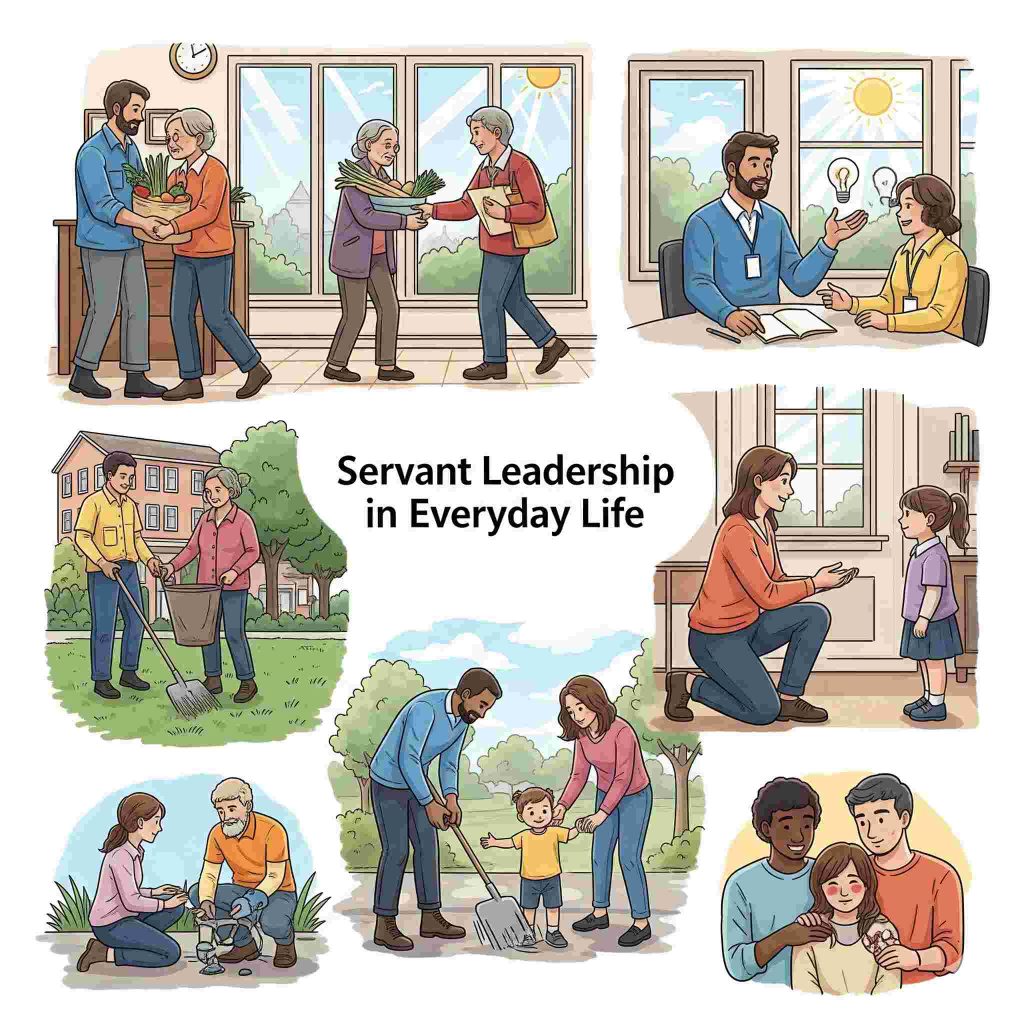
A servant leadership mindset is not only for CEOs or managers. It applies everywhere:
This mindset is powerful because it works in every setting, not just in organizations but in daily life.
Some of the world’s most respected leaders lived with a servant leadership mindset:
These examples show that the greatest leaders are remembered not for their power but for their service.
Even though it is rewarding, this mindset comes with challenges:
Overcoming these challenges requires commitment, resilience, and clarity of purpose.
Here are some practical actions you can take today:
The servant leadership mindset doesn’t just affect one person or one group. It spreads.
This ripple effect is what makes servant leadership powerful. Its impact continues long after the leader is gone.
By Dennis Ondrejka
This inspiring guide re-imagines leadership as an act of service rooted in empathy, humility, and purpose. Blending academic insight, personal stories, and practical tools, Servant Leadership equips readers to lead with heart and integrity-whether in the classroom, the boardroom, or everyday life. Drawing on timeless spiritual wisdom and modern research, Thibodeau and Ondrejka show how leading by serving can transform individuals, teams, and entire organizations. This is leadership as it was meant to be: good work, sacred work, our work.
Yes. You don’t need a title. Servant leadership begins with attitude, not position.
Yes. Studies show it boosts engagement, lowers turnover, and increases trust, all of which improve performance.
No. It requires courage to put others first while still making wise and tough choices.
Ask yourself: Are people growing and thriving because of how I lead?
Patience. Serving others takes time and consistency.
The servant leadership mindset is more than just a way to lead. It’s a way to live. It transforms workplaces, strengthens families, and builds communities.
By choosing to serve first, leaders create trust, inspire growth, and leave a lasting legacy. The greatest leaders are remembered not for their power but for their service.
Call to Action: Take one step today. Ask yourself, “Who can I serve, and how can I do it right now? ” That small choice can change someone’s life and yours.
Servant heart leadership is a leadership philosophy rooted in the idea that leaders exist to serve first and lead second, prioritizing the well-being, growth, and success of others before their own interests. This approach is grounded in decades of organizational research and has been embraced by many institutions and leaders around the world as a powerful way to build trust, engagement, and sustainable performance.
At its core, servant heart leadership flips the traditional leadership model upside down. Instead of leadership being primarily about authority or power, the servant-leader’s highest priority is serving others, helping people grow, feel valued, and realize their potential.
According to Robert K. Greenleaf, who coined the term in 1970, “The servant-leader is servant first.” The day the leader chooses to serve others is the day leadership truly begins.
Unlike top-down command structures, servant leadership:

Servant leaders build stronger teams by creating trust and psychological safety. When people feel heard, respected, and supported, engagement and productivity rise.
Research shows employees are more likely to stay with leaders and organizations where they feel appreciated. Servant leadership combats burnout and fosters a positive workplace culture.
Organizations that practice servant leadership benefit not just in morale but in innovation, resilience, and long-term performance because servant leaders encourage ownership and collaboration.
Here’s how servant leadership manifests in real leadership practice, drawing on key frameworks and research:
Servant leaders listen deeply before acting. This builds trust and shows respect for others’ perspectives.
Empathy isn’t just a soft skill; it is central to understanding and responding to the needs of your team.
Leaders act as stewards, treating people and resources with care and responsibility. This means decision-making that balances growth with ethical obligation and team well-being.
Servant leaders think ahead, guide based on insights, and help teams see the bigger picture while meeting immediate needs.
Servant leadership is not transactional; it is transformational. Leaders nurture the growth of others so they can flourish both personally and professionally.
A useful lens for understanding servant leadership is the 3 C’s:
| C | What It Means |
| Compassion | Genuine concern for people’s welfare and development. |
| Character | Integrity and moral strength that inspire trust. |
| Competence | The capability to lead effectively and help others succeed. |
These qualities work together to form a leader who is trusted, respected, and capable of bringing out the best in others.
Authentic leadership complements servant leadership. Leaders who are self-aware and consistent in their values build deeper trust. Authenticity reinforces servant leadership by aligning actions with values, encouraging honest dialogue, and strengthening psychological safety.
A stewardship mindset means seeing leadership as holding trust for others, not wielding authority over them. It emphasizes ethical decision-making, long-term responsibility, and protecting the well-being of people and the mission.
Servant heart leadership also includes encouraging the heart by uplifting team members through recognition, affirmation, and genuine care. This is especially important in high-pressure environments where morale can easily decline.
Practical ways to encourage the heart include:
These practices help teams feel appreciated and inspired to contribute at their best.
You don’t need a title to lead with a servant heart. Here are practical steps anyone can take:
Servant heart leadership means leading by putting people first. A servant-hearted leader focuses on helping others grow, succeed, and feel valued before focusing on authority or personal gain. Leadership starts with service, not control.
Traditional leadership often emphasizes hierarchy, power, and decision-making from the top down. Servant heart leadership emphasizes listening, empathy, shared responsibility, and empowering others. The leader supports the team rather than directing everything from above.
Yes. Servant heart leadership is effective in businesses, nonprofits, schools, and communities. Research shows it improves trust, employee engagement, teamwork, and long-term performance by creating healthier workplace cultures.
Examples include listening before speaking, recognizing team contributions, supporting personal growth, leading with integrity, sharing credit, and making decisions that consider people’s well-being alongside results.
No. Anyone can practice servant heart leadership regardless of position. It begins with mindset and daily actions, such as serving others, showing respect, and taking responsibility for how your actions affect those around you.
Servant heart leadership is more than a management style; it is a people-first philosophy that prioritizes service, trust, and growth. True leadership is not about power over others. It is about lifting others up, creating environments where everyone can contribute and thrive, and leading with integrity and purpose. This approach builds stronger teams, healthier organizations, and more meaningful results.
By Dennis Ondrejka
This inspiring guide re-imagines leadership as an act of service rooted in empathy, humility, and purpose. Blending academic insight, personal stories, and practical tools, Servant Leadership equips readers to lead with heart and integrity-whether in the classroom, the boardroom, or everyday life. Drawing on timeless spiritual wisdom and modern research, Thibodeau and Ondrejka show how leading by serving can transform individuals, teams, and entire organizations. This is leadership as it was meant to be: good work, sacred work, our work.
