Credibility in leadership is not about titles, power, or being the loudest voice in the room. It is about trust. Belief in a leader encourages people to listen, while trust inspires them to follow. Without credibility, even the strongest plans can quickly fall apart.
Today’s teams want leaders who are honest, consistent, and real. They want leaders who keep their word, admit mistakes, and act with purpose. This article explains what credibility in leadership truly means, why it matters, and how leaders can build it step by step.
Whether you lead a company, a team, a classroom, or a family, credibility is what makes leadership work.
Credibility in leadership means people believe in you. They trust your words, your actions, and your intentions. A credible leader does what they say and says what they mean.
Credibility has three simple parts:
When these three come together, leadership becomes natural. People do not follow because they have to. They follow because they want to.
The modern workplace has changed. People no longer stay loyal just because of a paycheck or job title. They stay because they trust leadership.
Research supports this shift:
Without credibility, leaders face resistance, silence, and burnout. With credibility, leaders build energy, teamwork, and long-term success.
Many leaders struggle, not because they lack skills, but because they lack trust.
Common pain points include:
These problems often come from broken promises, poor communication, or unclear values. Credibility solves these issues at the root.
Credible leaders tell the truth, even when it is uncomfortable. They do not hide bad news or shift blame.
Honesty does not mean knowing all the answers. It means being open, clear, and respectful. When leaders are honest, people feel respected and included.
Consistency means your actions match your words over time. People know what to expect from you.
If rules change daily or values shift when pressure rises, credibility breaks. Steady leaders create calm teams.
Credibility in leadership grows when leaders understand their role. They listen, learn, and make informed decisions.
Competent leaders do not pretend to know everything. They ask questions and invite input. This builds confidence across the team.
Strong character means leading with values like fairness, humility, gratitude, and discipline.
Leaders who act with integrity shape healthy cultures. Over time, these values become part of how teams work together.

Authentic leaders do not wear masks. They lead as real people, not perfect ones.
Authenticity builds credibility because it removes fear. When leaders are genuine, others feel safe being honest too. This leads to better communication, stronger collaboration, and fewer hidden problems.
Authentic leadership also supports emotional intelligence. Leaders who understand themselves can better support others.
Many modern leadership approaches are built on credibility.
In every case, credibility is the common foundation.
Positive leaders do not ignore problems. They focus on solutions.
Gratitude also strengthens credibility. Leaders who say thank you, recognize effort, and celebrate progress build trust faster.
Studies show employees who feel appreciated are four times more likely to stay engaged at work. Credibility grows when people feel seen.
Credibility in leadership requires discipline. Leaders must manage emotions, time, and priorities.
Leadership maturity shows when leaders respond thoughtfully instead of reacting emotionally. Calm leadership builds confidence during change and uncertainty.
Teams trust leaders who stay steady when things get hard.
Credibility starts with small actions. Show up on time. Follow through. Respond when you say you will.
Small promises kept often matter more than big speeches.
Listening builds trust quickly. When people feel heard, they feel valued.
Ask questions. Pause before responding. Show curiosity instead of control.
Leaders who admit mistakes grow credibility. Blame destroys it.
Owning errors shows confidence and humility. It also encourages learning.
Values guide decisions. When leaders act based on clear principles, people understand the “why” behind choices.
Principled leadership removes confusion and builds respect.
Credible leaders trust their teams. They give responsibility, support growth, and share credit.
Empowerment tells people, “I believe in you.” That belief builds loyalty.
Credibility is not built overnight. It grows through daily actions over time.
Organizations with credible leaders experience:
Trust compounds. Once earned, it creates momentum.
Myth 1: Credibility comes from authority.
Truth: Credibility comes from behavior, not titles.
Myth 2: Leaders must always be confident.
Truth: Honest uncertainty builds more trust than fake confidence.
Myth 3: Being nice is enough.
Truth: Credibility requires clarity, boundaries, and fairness, not just kindness.
Breaking trust. This includes lying, blaming others, or failing to follow through consistently.
Yes. Rebuilding credibility takes time, honesty, and consistent action. Apologies must be followed by change.
No. Credible leaders may not always be liked, but they are respected and trusted.
Teams with credible leaders show higher engagement, stronger collaboration, and better results.
Studies show most employees leave due to poor leadership, lack of trust, and broken credibility.
Credibility in leadership is not a skill you turn on and off. It is a daily choice.
Every conversation, decision, and action either builds trust or breaks it. Leaders who choose honesty, consistency, and character create environments where people thrive.
Leadership is not about control. It is about connection. And credibility is what makes that connection strong.
If you want to lead with impact, start with trust. Everything else follows.

By Dennis Ondrejka
This inspiring guide re-imagines leadership as an act of service rooted in empathy, humility, and purpose. Blending academic insight, personal stories, and practical tools, Servant Leadership equips readers to lead with heart and integrity-whether in the classroom, the boardroom, or everyday life. Drawing on timeless spiritual wisdom and modern research, Thibodeau and Ondrejka show how leading by serving can transform individuals, teams, and entire organizations. This is leadership as it was meant to be: good work, sacred work, our work.
Leadership does not fail from lack of talent.
It fails from lack of discipline.
Many leaders feel inspired at the start. They speak with passion. They set bold goals. Then habits slip. Standards change. Promises fade.
Teams notice.
Discipline in leadership is what keeps values steady when pressure rises. It is what turns good intent into reliable action. This guide explains what discipline in leadership means, why it matters, and how leaders can build it without becoming rigid or cold.
Discipline in leadership means doing the right thing consistently, even when it feels uncomfortable or inconvenient.
A disciplined leader:
Discipline is not control.
It is self-control first.
Without discipline, leadership becomes reactive. With discipline, leadership becomes stable.
Motivation changes often. Discipline stays.
A Forbes leadership study reported that disciplined leaders outperform highly motivated leaders during long-term challenges. Motivation spikes at the start. Discipline carries people through the middle and the end.
Motivation says, “I feel ready.”
Discipline says, “I will do this anyway.”
Teams rely on discipline, not moods.
Trust grows when actions match words.
When leaders:
People feel safe.
According to a Gallup workplace study, employees who trust leadership are 4 times more likely to stay engaged. Discipline creates predictability. Predictability builds trust.
This directly supports leadership maturity, which grows when leaders choose steady behavior over short-term comfort. Leadership maturity reflects growth in judgment, patience, and responsibility.
Strong leaders practice both.
This includes:
Leaders who lack self-discipline struggle to guide others.
This includes:
When self-discipline and organizational discipline align, teams perform better.
Emotional discipline is the ability to pause before reacting.
This shows up when:
Undisciplined reactions create fear. Disciplined responses create respect.
Research from the American Psychological Association shows leaders who regulate emotions reduce team stress and improve decision quality.
Emotional discipline supports leading with authenticity, since authentic leaders respond with honesty and control, not emotional swings.
This is a common myth.
Discipline works best when paired with:
A disciplined leader can still be kind. In fact, kindness without discipline confuses teams.
This balance aligns closely with principled leadership, where values guide behavior, not convenience.
Discipline supports, not blocks, modern leadership.
Discipline sets clear expectations so teams can act with confidence. This supports empowering leadership styles where autonomy depends on trust.
Shared leadership needs disciplined communication and follow-through. Without discipline, collaboration breaks down.
Involving others in decisions works only when leaders stay disciplined about listening, acting, and closing loops.
Discipline is the structure that allows flexibility.
They define what “good” looks like and repeat it often.
They commit to what they can deliver.
They review actions weekly, not yearly.
They address issues early, not later.
They pause before reacting.
These habits create long-term respect.
Some believe discipline kills morale. The opposite is true.
Disciplined leaders reduce chaos. Less chaos leads to calm. Calm supports positivity.
Research from Harvard Business Review shows predictable leadership lowers burnout and improves morale.
This supports why positivity is important in leadership, as positivity grows when teams feel secure.
Discipline grows with experience.
Early leaders rely on energy. Mature leaders rely on habits.
Leadership maturity includes:
Discipline is a marker of growth, not restriction.
Awareness helps leaders correct course early.
It means doing the right things consistently, even when it feels hard.
Yes. Studies show consistent leadership increases engagement, trust, and output.
Discipline lasts longer. Motivation fades. Discipline carries leaders through pressure.
Start with small habits, clear standards, and regular self-review.
No. Discipline creates structure so leaders can stay flexible without chaos.
Reflect on your leadership habits this week.
Ask yourself:
Share your thoughts in the comments or explore related leadership guides on Transcendent Seekers to continue your growth journey.
By Dennis Ondrejka
This inspiring guide re-imagines leadership as an act of service rooted in empathy, humility, and purpose. Blending academic insight, personal stories, and practical tools, Servant Leadership equips readers to lead with heart and integrity-whether in the classroom, the boardroom, or everyday life. Drawing on timeless spiritual wisdom and modern research, Thibodeau and Ondrejka show how leading by serving can transform individuals, teams, and entire organizations. This is leadership as it was meant to be: good work, sacred work, our work.
Leadership maturity shapes how people experience work. It influences trust, morale, and results. A mature leader stays calm during pressure, listens before reacting, and acts with fairness even when it feels hard.
Many people think leadership maturity comes with age or job title. That idea misses the truth. Maturity grows through awareness, reflection, and steady practice. Some young leaders show deep maturity. Some senior leaders still struggle with it.
This article explains leadership maturity in clear terms. You will learn what it is, how it shows up in daily actions, why teams depend on it, and how it connects to modern leadership styles that value people first.
Leadership maturity is the ability to lead with emotional control, clear judgment, and respect for others. It shows in how leaders respond, not react.
A mature leader:
Leadership maturity focuses on behavior, not authority.
According to research from the Center for Creative Leadership, leaders who manage emotions well are more likely to earn trust and improve team performance. Emotional control remains one of the strongest predictors of leadership success.

Leadership skills can be learned fast. Maturity takes time.
Skills include:
Maturity includes:
A leader can have strong skills and still lack maturity. Teams feel this gap quickly.
This is why many leadership experts now say development depends more on maturity than technique.
Mature leaders pause before speaking. They do not lash out. They manage frustration without blaming others.
This behavior creates safety. Teams speak up more when leaders stay steady.
Leadership maturity includes owning outcomes. When things go wrong, mature leaders ask, “What can I learn?” instead of “Who failed?”
This builds trust fast.
Mature leaders treat people with dignity. They do not talk down to others. They respect time, effort, and input.
This aligns with principled leadership, where values guide decisions instead of convenience.
Immature leadership often seeks quick wins. Mature leadership weighs long-term impact.
This thinking supports distributed leadership, where responsibility spreads across capable team members.
Leadership maturity develops in stages. Growth feels uneven and personal.
Leaders react fast and emotionally. Decisions depend on mood or pressure.
Teams feel uncertain at this stage.
Leaders rely on tools and systems. Results improve, but emotional gaps remain.
Conflict still feels personal.
Leaders pause and reflect. They listen more. They seek feedback.
Trust begins to grow.
Leaders act with consistency and calm. Teams feel safe and valued.
This stage supports collective leadership, where success comes from shared ownership.
Teams mirror leadership behavior.
When leaders act with maturity:
Gallup reports that teams with emotionally intelligent leaders show up to 21% higher productivity and 59% lower turnover.
Leadership maturity makes space for:
Each of these styles depends on trust and emotional steadiness.
Leadership maturity acts as the foundation for modern leadership.
Without maturity, these styles collapse into performance acts.
Leadership maturity grows through experience and reflection.
Key growth drivers include:
Growth feels uncomfortable at times. That discomfort signals learning.
Leaders who commit to reflection develop steadier judgment and stronger presence.
Ask yourself:
Honest answers reveal growth areas.
Reality: Growth comes from reflection, not years.
Reality: Emotional control shows strength.
Reality: Respect earns influence, not titles.
Leadership maturity means leading with calm judgment, emotional control, and respect for others.
Yes. It develops through reflection, feedback, and experience.
Immature behavior creates fear, confusion, and low trust.
It improves engagement, retention, and decision quality.
Yes. Emotional awareness plays a central role in mature leadership behavior.
Leadership maturity decides whether people follow out of fear or respect. It shapes culture more than policies ever will.
Mature leaders create space for others to grow. They lead with calm, fairness, and purpose. They support modern leadership styles that value people, trust, and shared responsibility.
If this article helped you reflect on your leadership growth, explore related guides on modern leadership styles, empowering leadership, and gratitude in leadership to deepen your impact.
Share your thoughts in the comments or pass this article to a leader who wants to grow with purpose.
By Dennis Ondrejka
This inspiring guide re-imagines leadership as an act of service rooted in empathy, humility, and purpose. Blending academic insight, personal stories, and practical tools, Servant Leadership equips readers to lead with heart and integrity-whether in the classroom, the boardroom, or everyday life. Drawing on timeless spiritual wisdom and modern research, Thibodeau and Ondrejka show how leading by serving can transform individuals, teams, and entire organizations. This is leadership as it was meant to be: good work, sacred work, our work.
Many leaders focus on results, deadlines, and goals. Those things matter. Yet teams do not succeed on numbers alone. People drive results.
Gratitude in leadership means noticing effort, valuing people, and saying thank you with purpose. It is not about flattery. It is about respect.
Leaders who practice gratitude build trust. They lower stress. They help people feel seen. Over time, this creates teams that work harder and stay longer.
This guide explains gratitude in leadership in clear terms. You will learn why it matters, how it works, and how to practice it every day.
Gratitude in leadership is the habit of recognizing effort, character, and contribution. It goes beyond saying “good job.”
A grateful leader:
Gratitude is intentional. It does not wait for big wins. It shows up during regular work.
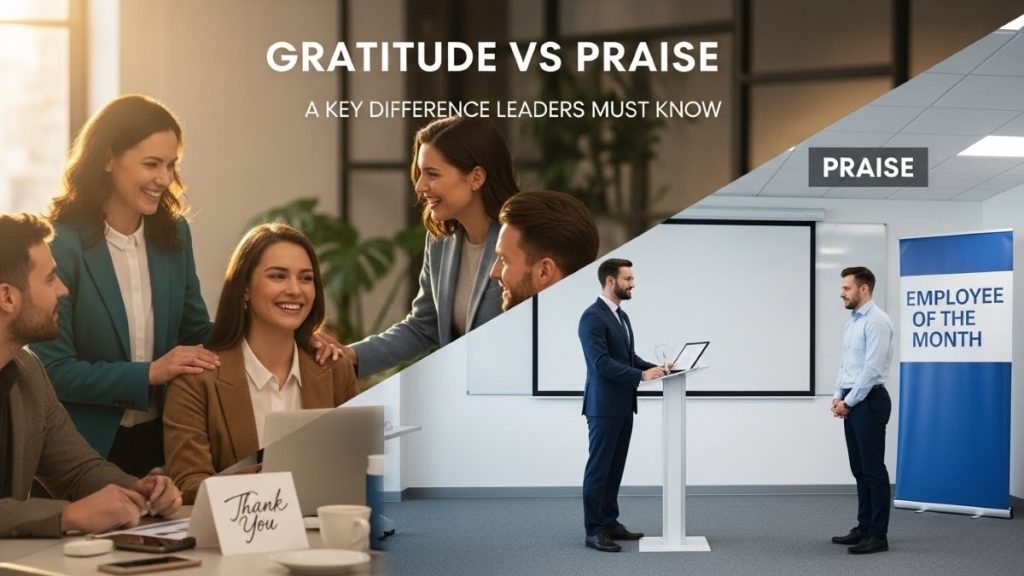
Praise often focuses on outcomes.
Example:
“You did great on that report.”
Gratitude focuses on value and effort.
Example:
“Thank you for staying late to finish that report. It helped the team meet the deadline.”
Praise feels good. Gratitude builds trust.
When leaders express gratitude, people feel respected, not judged.
People trust leaders who see them. Gratitude shows that a leader pays attention.
According to a 2023 Gallup study, employees who feel appreciated are 2.6 times more likely to stay engaged at work.
Trust grows when leaders thank people for real effort.
Teams perform better when people feel safe and valued.
Harvard Business School research found that teams with higher appreciation levels show stronger cooperation and higher output.
Gratitude removes fear. People speak up. They share ideas.
Burnout often comes from feeling invisible.
A study from the American Psychological Association shows that employees who feel valued report lower stress and better mental health.
Grateful leadership supports well-being without extra cost.
Gratitude fits naturally with modern leadership approaches.
Empowering leaders trust their teams. Gratitude reinforces that trust by recognizing effort and growth.
Related reading: Empowering leadership style
Participative leadership depends on shared input. Gratitude encourages people to speak and contribute.
Related reading: Participative leadership advantages and disadvantages
Collective leadership values shared responsibility. Gratitude highlights how each role matters.
Related reading: Characteristics of collective leadership
Avoid vague thanks.
Say:
Specific gratitude feels real.
Public appreciation builds team morale.
Short shout-outs in meetings or messages help others feel motivated.
Gratitude matters most during hard moments.
Thank people when:
This builds loyalty.
A short message or email can mean more than a bonus.
Keep it honest and brief.
Gratitude works best when it is consistent.
Set reminders. Make it part of your leadership rhythm.
Gratitude shapes culture.
Teams led with gratitude:
This aligns closely with positive leadership principles.
Related reading: Why positivity is important in leadership
Authentic leaders speak with honesty. Gratitude supports that honesty.
When thanks is genuine, people feel it.
Related reading: Leading with authenticity guide
Gratitude should never manipulate behavior.
People notice when thanks feels forced.
Quiet contributors matter too.
Gratitude should reach all roles.
Delayed gratitude loses impact.
Say it close to the action.
Gratitude is not personality-based. It is a discipline.
Leaders who commit to gratitude:
This aligns with principled leadership values.
Related reading: Principled leadership core values
Gratitude builds trust, engagement, and motivation. People work better when they feel valued.
Yes. Studies show appreciated employees are more likely to stay and perform well.
No. Gratitude strengthens accountability by building respect and trust.
Often. Small, regular moments matter more than rare gestures.
Yes. Gratitude reduces stress and helps teams stay focused during pressure.
Gratitude in leadership is simple, but it is powerful.
It changes how people feel at work, shapes how teams respond to challenges, and influences how leaders are remembered.
Great leadership is not about control. It is about connection.
Gratitude builds that connection one moment at a time.
If you want to grow as a leader, start small.
This week:
For deeper insights, explore more on modern leadership styles and people-centered leadership practices at Transcendent Seekers.
Your leadership voice matters. Let gratitude be part of it.
By Dennis Ondrejka
This inspiring guide re-imagines leadership as an act of service rooted in empathy, humility, and purpose. Blending academic insight, personal stories, and practical tools, Servant Leadership equips readers to lead with heart and integrity-whether in the classroom, the boardroom, or everyday life. Drawing on timeless spiritual wisdom and modern research, Thibodeau and Ondrejka show how leading by serving can transform individuals, teams, and entire organizations. This is leadership as it was meant to be: good work, sacred work, our work.
People follow leaders they trust. They follow leaders who show up as real human beings, not a polished mask. This is why leading with authenticity matters so much today. Teams want honesty, clarity, and consistency. They want leaders who keep their word and act with purpose.
In this guide, you will learn what authentic leadership looks like, why it raises trust and performance, and how you can practice it every day. You will get simple steps, examples, and habits you can use at work, at home, and in your community.
If you want to explore how modern leadership is changing, you can also read
Modern Leadership Styles for High-Impact Teams.
Authentic leadership means you lead with honesty, self-awareness, and steady values. You do not act one way with your team and another way behind closed doors. You say what you mean and follow through.
An authentic leader:
These traits create a space where people feel safe to speak up, share ideas, and do their best work.

Research on leadership shows that trust in leaders has a strong link to engagement, performance, and retention. Teams are more likely to go the extra mile when they trust their leaders’ character and words.
People want leaders who:
When people see this kind of leader, they feel safe. Safe teams speak up, solve problems faster, and bring better ideas forward.
If you want to see how positivity helps leaders, you may explore
Why Positivity Is Important in Leadership: A Complete Guide.
Many leaders want to be real, yet they feel held back by fear and pressure.
Common reasons include:
They worry that showing doubt, emotion, or limits will make others lose respect.
They think they must fit a certain image of a leader instead of being themselves.
They hide mistakes or questions to look strong at all times.
They avoid hard conversations, even when the truth would help the team.
They model their style on someone else and ignore their own strengths.
Authentic leadership grows when you face these fears and choose honesty over image, step by step.
Trust is not a soft extra. It has a strong impact on real results:
Authenticity supports these outcomes. When leaders are honest and consistent, trust grows. When trust grows, teams perform better.
For a deep dive into values-based leadership, you can also read
Principled Leadership: How Values Shape Strong Teams and Cultures.
Here are simple, clear traits that mark authentic leadership.
You know your strengths, limits, triggers, and values. You keep learning about yourself and how you affect others.
Speak the truth with respect. Skip jargon or vague statements. Deliver your message in a simple and kind way.
You act in line with your values even when things get hard. People know what to expect from you.
You own your choices. You admit mistakes early, fix them, and learn from them.
You treat every person with dignity. You listen, invite input, and care about impact, not just intent.
You connect your decisions to a clear “why.” Your team knows what you stand for and where you are headed.
These qualities overlap with many people-first models, including servant leadership. For example, the 7 Pillars of Servant Leadership place strong weight on character, putting people first, and moral authority.
You do not need a big title to lead with authenticity. Small daily actions speak the loudest.
This simple line shows honesty and builds trust.
Do not wait for someone to point them out. Own them, share what you learned, and move on.
Let your team know what matters most to you: fairness, growth, kindness, clarity, or service.
Try questions like, “What is one thing I could do better as your leader? ” Then listen without defense.
People feel safe when praise is shared openly, and corrections are made with care and respect.
These small behaviors build a strong reputation as a real, trustworthy leader.
Remote and hybrid work can make it harder to show your real self, but you can still build trust.
Let people see your face when you share vision, changes, or thanks.
In chat and email, short and kind messages help. A simple “Thank you for this; here is the next step” can do a lot.
Be honest about what good work looks like, how to ask for help, and when you are reachable.
Explain the “why” behind the work. This shows respect and helps people feel included.
Use them to ask how people are doing, not only what they are doing.
These habits show that even online, you care about people, not just output.
You can use this simple plan as your personal roadmap.
Examples: honesty, fairness, growth, service, and courage. Write them down and keep them nearby.
When you feel off, pause and ask, “Which value did I ignore here? ” Then choose a better response next time.
Before you speak or send a message, ask, “Is this true? Is it clear? Is it kind?
For example, end each week with “Here is one thing I did well and one thing I need to improve.
Ask yourself, “Who am I here to serve in this role, and how can I make their life better today?
If you want a mindset that fits well with authentic leadership, explore
Servant Leadership Mindset: A Complete Guide to Leading With Purpose.
Let’s clear up common myths that confuse leaders.
Truth: Authenticity is honest, not unfiltered. Wise leaders share what is helpful, kind, and needed, not every thought or feeling.
Truth: Growth is part of being real. You can evolve your style while staying true to your core values.
Truth: Emotion is part of being human, but authentic leaders still stay grounded. They feel, then respond with care.
Truth: Authentic leaders aim to be fair and kind, not universally liked. Sometimes honesty means hard truths and tough choices.
When leaders act real and steady, it changes the team climate:
Over time, this kind of culture supports higher engagement, better performance, and a stronger sense of shared purpose.
For more on people-first leadership in action, you can look at
The Power of Servant Leadership and
Benefits of Servant Leadership.
Authenticity builds trust. When people see that your words and actions match, they feel safe and respected. This trust leads to stronger teamwork, better ideas, and more honest feedback.
Start by knowing your values, telling the truth with kindness, and owning your mistakes. Ask for feedback and show that you are willing to grow.
No. Real strength shows when you can admit limits and still move forward. People usually respect leaders more when they are honest and human.
Yes. You can be real without sharing every detail of your life. Authenticity is about truth and alignment, not full exposure.
Both focus on trust, care, and strong values. Authentic leaders act in line with who they are. Servant leaders focus on serving others first. Many great leaders apply both at the same time.
Leading with authenticity is not about becoming someone new. It is about being more honest, more aware, and more aligned with your best self. When you lead from your values, people feel it. Trust grows. Teams thrive. Work starts to feel meaningful, not just busy.
If you want to keep growing as a leader who serves and inspires, you can explore more guides at Transcendent Seekers.
Take one small step today:
You can also:
By Dennis Ondrejka
This inspiring guide re-imagines leadership as an act of service rooted in empathy, humility, and purpose. Blending academic insight, personal stories, and practical tools, Servant Leadership equips readers to lead with heart and integrity-whether in the classroom, the boardroom, or everyday life. Drawing on timeless spiritual wisdom and modern research, Thibodeau and Ondrejka show how leading by serving can transform individuals, teams, and entire organizations. This is leadership as it was meant to be: good work, sacred work, our work.
